


If you’re enjoying Duchump and want to help make coverage like this possible, please consider subscribing.
Your subscription keeps this project alive and independent. At a time when much of fashion media is driven by traffic, affiliate links, and advertising, I want Duchump to remain a place for thoughtful reporting and honest criticism.
Thank you for your support.
(Last Edited: 8:13AM PST — added brief interview with Shotaro Yamaguchi)
As I approach Palais de Tokyo, a man pulls up beside me, feet planted firmly on the ground after ripping up the block on a Lime bike.
“Tu sais que c’est là que vit Mbappé?”
I take out my earbuds, Tara Clerkin Trio now playing faintly in the background, and ask him to repeat himself.
“Cet appartement-là, c’est là que vit Mbappé. Parlez-vous français?”
Embarrassingly, I tell him I can’t speak French, though I do know who Mbappé is, as does the rest of the world. He points toward the top of a building in the distance.
“That’s where he lives,” he tells me.
Then, as suddenly as he pulled up beside me on his Lime bike, he’s gone.
Now armed with this completely unnecessary(?) piece of information, I continue toward Palais de Tokyo, wondering whether the interaction I just had was some sort of fever dream brought on by the inhospitable heat and lack of sleep. I enter the iconic gallery, home to countless Rick Owens presentations over the years, and I begin wondering what the next 45 minutes will have in store.
Unlike last season, the room feels hollow, cold. There isn’t much colour, or much life to it. It’s the perfect setting to present something that feels completely at odds with its environment.
Peter Sherno, a friend I met in New York and an incredibly talented photographer, greets me with a hug before I’m asked to head back to my seat. Edward Buchanan sits front of me, I begin screaming internally. The room’s slowly becoming brighter, the music becomes more prominent and clear rather than a distant echo.
The show is about to begin.
There are only a handful of brands on the Paris Fashion Week calendar that really get me excited these days. The majority cater to a demographic I don’t really resonate with anymore, but there’s one brand that has consistently kept me interested over the past few seasons, and that brand is Kiichiro Asakawa’s ssstein.
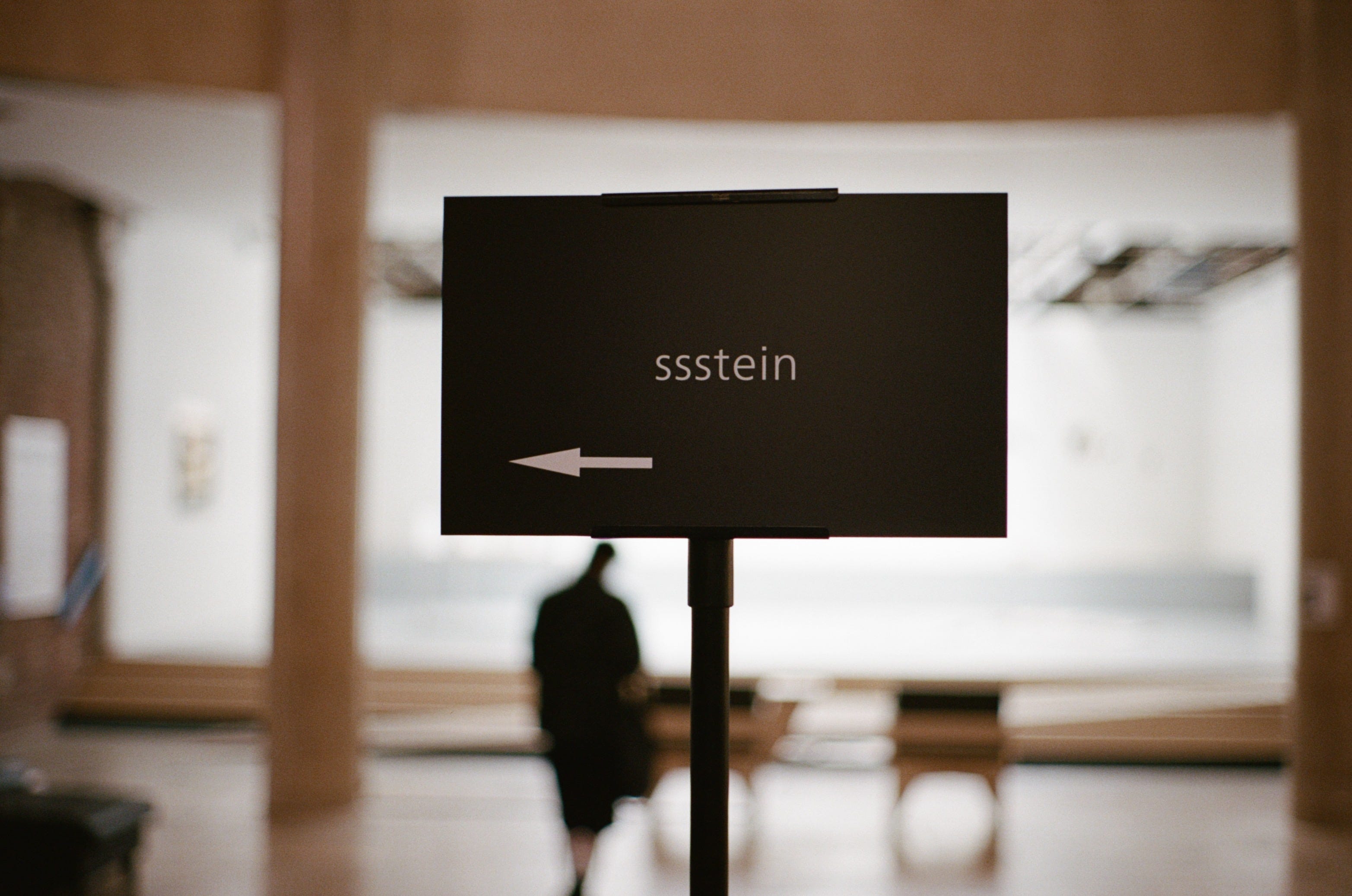
There are a few reasons why, but the first is the quality and fit.
As someone with a bigger frame, or let’s call it a mid-sized frame, ssstein is one of the few Japanese brands that consistently fits me well. Of course, there are a few exceptions. The sulfur-dyed jacket from FW25 and the baggy denim jeans were either weirdly oversized yet short, or weirdly long yet snug. Whether it was intentional or not, I ended up selling both, unfortunately.
Regardless of those exceptions, their shirting and sweaters are consistently flattering and comfortable, with their wools, silks, and rayons being among the best in contemporary menswear. To me, Kiichiro Asakawa’s fabric selection always feels premium, and for the price point, it’s genuinely difficult to beat. Especially when brands occupying the same space in menswear are selling shirts of similar, or sometimes lesser, quality for significantly more.
With sizing, I’ve yet to have any major qualms with the brand, other than the limited inventory some stores have, and how quickly I’ll miss out on a piece. I find that, because of their looser proportions, the sleeves and shoulders (aside from the one jacket and jeans) fit majestically on someone like myself with broad shoulders, longer arms. These two segments are my biggest weaknesses with shirts, and ssstein consistently hits it outta the park.
These call me Wemby Jr. (they don’t call me that) because of these long-ass arms.
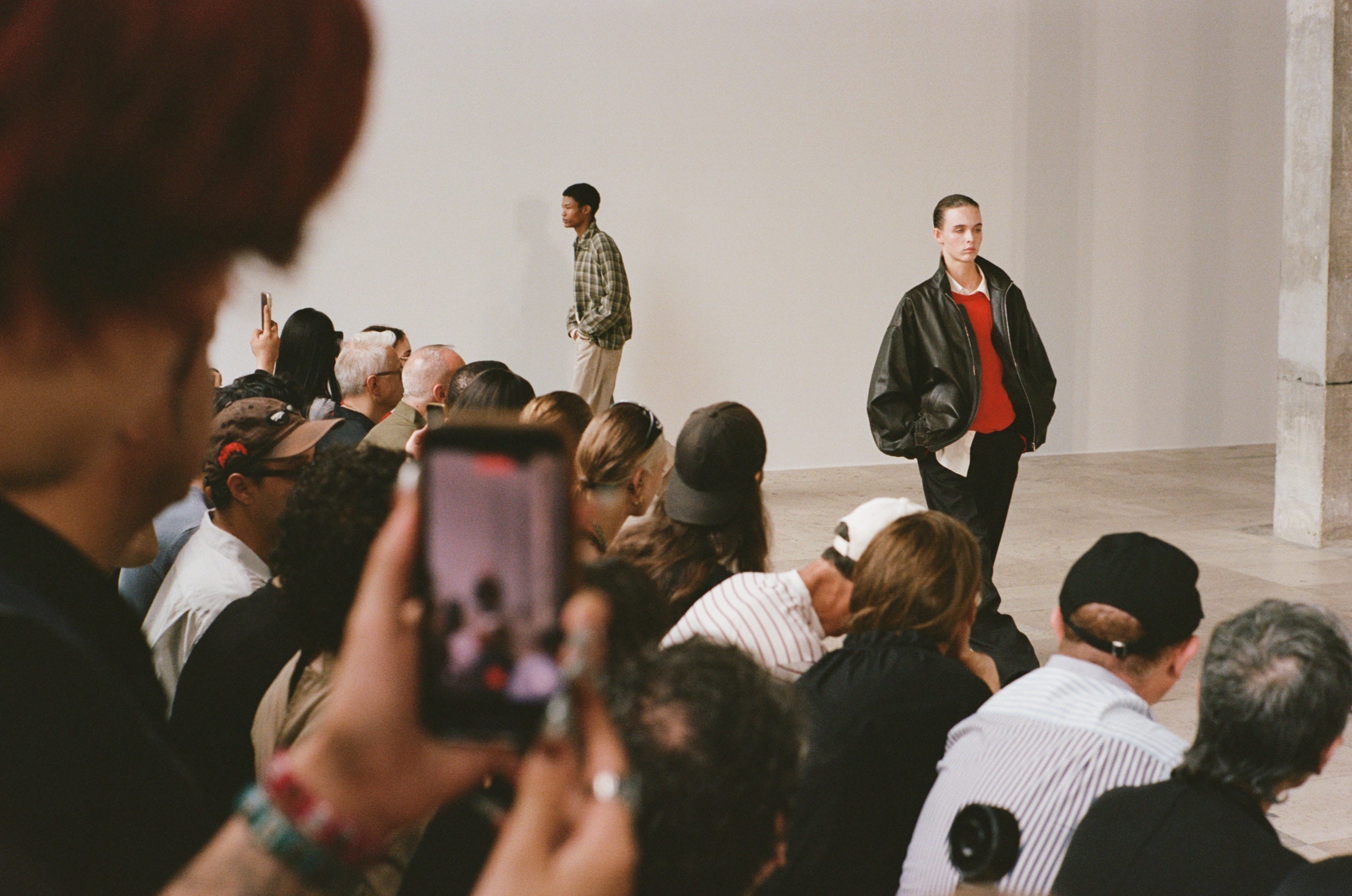
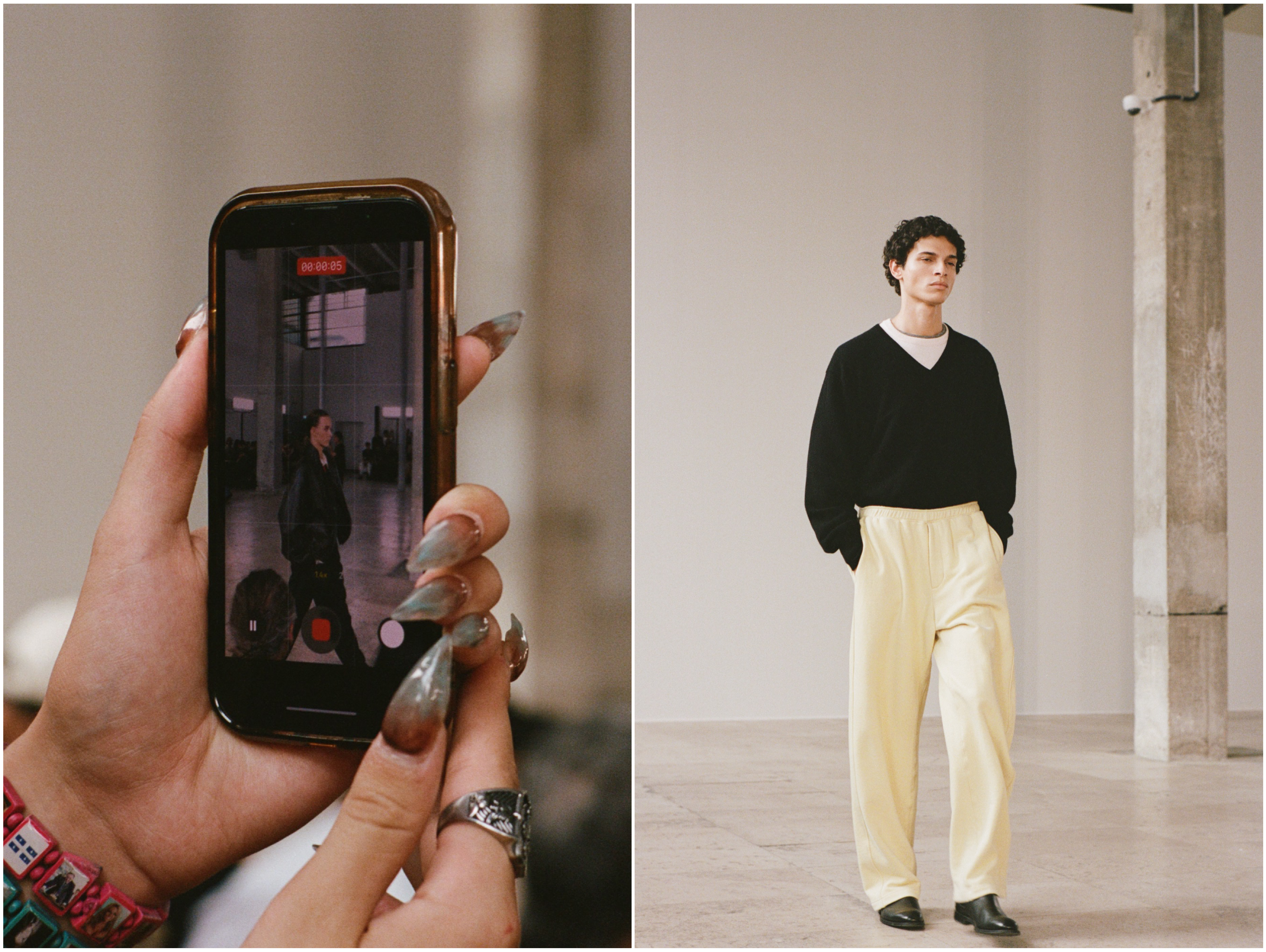
This season, we saw another round of lightweight, airy skipper shirts (the light pink one was a favourite— also, remember what I said in my previous post about pinks?), classic plaids, v-neck cashmere sweaters, and cashmere crewnecks. Garments we've seen before, both dressed up and down, yet still presented in ways that felt fresh.
With that in mind, the question of repetition comes up again. In my Auralee review, I mentioned how I feel like I’ve grown out of the Auralee perspective in some ways, with SS27 feeling a bit flat. It came across as gimmicky and repetitive, and while there were still some strong looks, they didn’t land with the same impact they have in previous seasons.
With ssstein, though, Asakawa continues to demonstrate such a sharp eye for menswear that, despite the repetition, it still feels fresh. For lack of a better term, and I know y’all hate this word, it feels timeless. That does beg the question though:
How many silk/cotton skipper shirts is too many? Will we see another teal or emerald cashmere sweater next season? How many vintage inspired workwear jackets are too many?
To be fair, the design language Asakawa has built is still relatively young. While the brand is 10-years old, that consistency we’ve seen recently has really only become apparent over the last three or four collections, including this one. That being said, their outerwear was, yet again, a highlight this season, though that’s almost expected with Asakawa now.
You have those classic ssstein-isms: the zip blousons, another iteration of the sulfur-dyed jacket, but this time in corduroy. I still love the way they reinterpret familiar workwear silhouettes, whether that’s adding a sheep leather collar, exaggerating the proportions, or simply presenting them in colours you wouldn’t normally associate with those pieces.
The opening two looks were immediate hits. Both suede jackets struck this beautiful balance between vibrance and subtlety. The red hooded jacket was another standout, though honestly, ssstein’s red outerwear has quietly become one of my favourite things they’ve done over the past couple of seasons.
Their leather jackets also deserve far more attention. The sheep leather pieces are incredibly well-priced considering the quality. One from FW25 retailed for around $1,600CAD. Auralee, despite using a similar, if not the same, material for their own jacket, sold theirs for over $3,000CAD.
It also, and maybe this is a hot take, looked incredibly average. But alas.
As for ssstein, well, this is where they excel, using premium fabrics, thoughtful construction, wearable silhouettes, and pricing that still feels reasonable within luxury menswear. It’s no wonder why the majority of their collection sells out instantly.
The second reason I loved SS27 was the styling.
Shotaro Yamaguchi’s work remains incredible. He brings this surrealist quality to otherwise practical, everyday clothing. Individually, these are fairly simple garments. Beautifully made, yes, but pieces that most people that don’t work in fashion probably wouldn’t bat an eye at. The styling is what transforms them into something much more artistic.
One look that really stuck with me was what I assume were wool shorts with a cashmere V-neck layered over two collared shirts, belted with loafers and no socks. Even the look after it, either two skipper shirts layered on top of each other, or a V-neck sweater layered over a skipper shirt with another pair of short shorts and an oversized coat, I genuinely couldn’t tell because everything was happening so quickly, was fantastic.
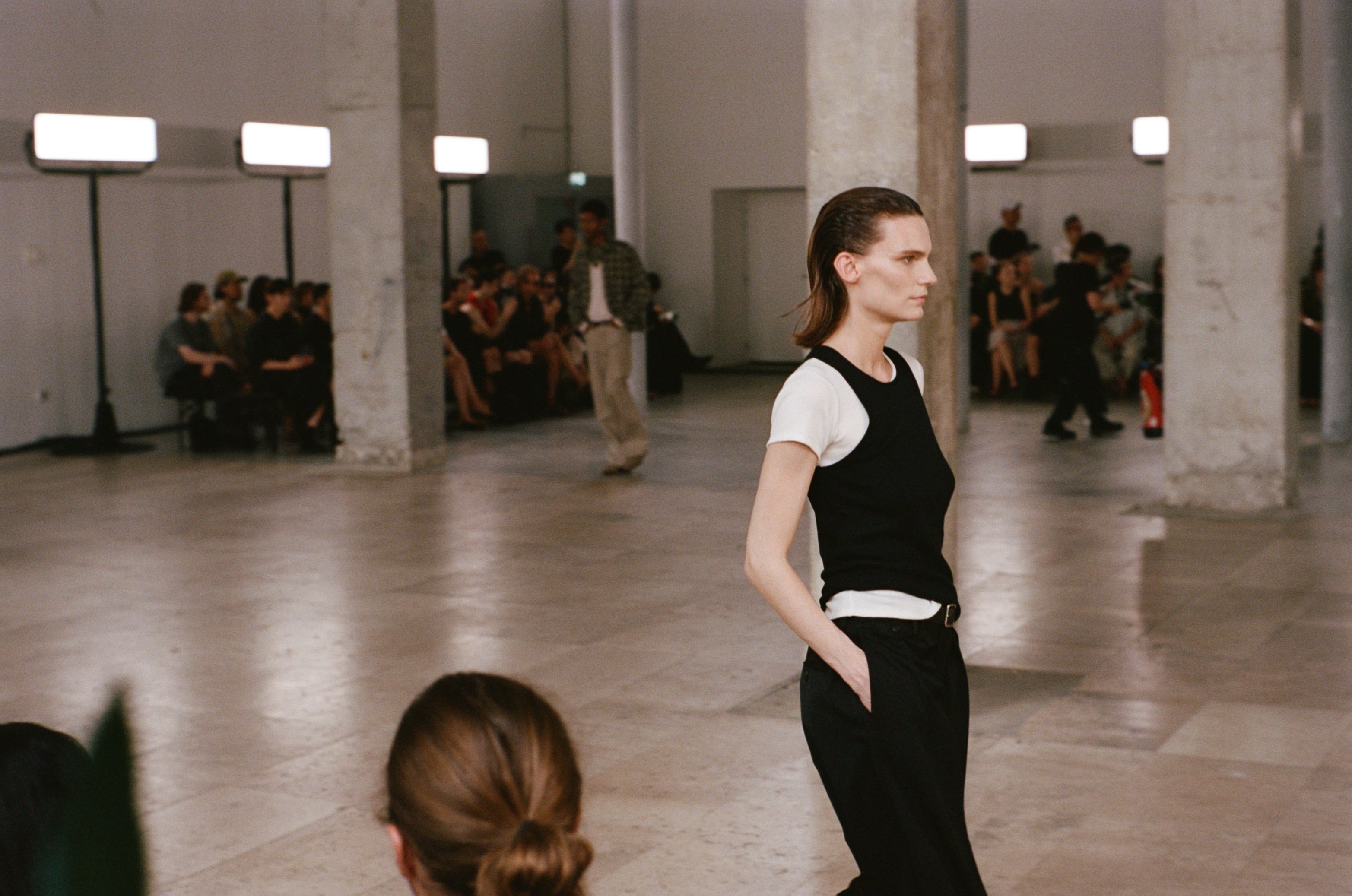
While the menswear was still strong, the womenswear (Asakawa presents both menswear and womenswear collections at once), and the styling behind it, was a massive hit. The latest iteration of the Vintage Whip Cord Jacket was layered over a silk blouse and two crewnecks, finished with a pair of shorts. It feels like such a duh moment, but it works. You almost feel stupid for not thinking of it yourself, but that's why Shotaro excels. He keeps you on your toes.
That’s what I love about his work. He combines colours that shouldn’t necessarily work together, but somehow they do. He layers, and layers, and layers, bringing out elements that could be considered “disheveled” or “sloppy,” yet somehow making everything feel more human. These are lived-in looks, they feel natural and effortless. Still thoughtful, still put together, but believable.
There’s something romantic about it, but also slightly absurd, in the best way. I asked Shotaro a few questions regarding his time working with Asakawa and his creative approach.
Cue brief interview:
You work feels both so elegant yet complex. Can you explain the approach, or inspiration, for your work?
I try not to overthink things. Instead, I let myself be carried by something like the natural rhythm of my own intuition. I make a conscious effort to stop before my hands become controlled by my thoughts. I want the work to come from instinct rather than calculation.
How long have you worked with Kiichiro Asakawa? What has that been like?
I've been working with Kiichiro Asakawa for about five years now. I'm constantly inspired by the balance of his perspective and the way he thinks. Working alongside him has been an incredibly stimulating experience.
Do you find it easier to style a look when the garments are of a finer quality, like ssstein's cashmere sweaters for example? Or their silk skipper shirts?
I think quality is a very important element in creating an atmosphere. However, what matters most to me is the world a brand is trying to express through its clothing. Whenever I have the opportunity to work with a brand that has a clear vision like that, it's always incredibly exciting.
Do you feel like your work is constantly evolving each season? If so, how?
Perhaps my work is evolving, or perhaps it's regressing, I honestly don't know. It feels a bit like nature itself — flowers, living things, the natural world. As time passes, something is always being lost while something else is quietly being accumulated. I try to stay open to whatever surrounds me in that moment (the model, the clothes, the fabric, the weather, and everything else) and to trust those influences, allowing them to guide me as naturally as possible.
As per the show notes, the collection is designed with endless styling potential in mind, while still making use of premium materials like silk, deerskin, and corduroy.
Sidenote: One piece I especially want to call out appears toward the end of the show: the brown leather car coat. Absolutely stunning, it is stunnnnnninggggg. The sheen, the way the leather creased and reflected the light, it was gorgeous and has set the bar high this season for car coats in my opinion. The all-brown styling didn’t hurt either, though this is coming from someone who’s an absolute sucker for monochromatic brown outfits.
Speaking of brown, another thing Asakawa consistently nails is colour.
The third thing I love about this collection: colour, colour, colour.
Kiichiro Asakawa found himself inspired after spending the morning at a lakeside. The stillness he felt as rays of light broke through the trees, illuminating the landscape and filling it with delicate colour, became the foundation for the collection. That feeling was later reinforced after coming across a series of watercolour paintings by Roni Horn.
Although I’ll typically gravitate toward darker, more muted tones, I’ve loved their colour choices over the last four seasons. It’ll be an assortment of colours that, while I personally wouldn’t wear together, somehow looks fantastic.
Asakawa spends most of the collection working within an incredibly digestible palette, before suddenly introducing a rich teal, lots of soft butter/vanilla yellows this season, a rich green, and of course, those beautiful, hard-hitting reds that completely shift the mood without ever feeling forced. God, I could write an essay on how his red jackets have struck a chord with me and lingered in my mind since January.
There's one piece I'd like to highlight, the Light Yellow Nylon Blouson, developed exclusively for ssstein by Olmetex. The 74-year-old textile mill, based in Italy, paired with its garment-dyeing process, gives the jacket its vibrant yellow colour and worn-in appearance. Another standout was the mid-length corduroy coat, made using fabric from Pontoglio, the 130-year-old Italian mill. Most collections have one, maybe two hero garments (aka statement pieces, showstoppers, you get the gist).
I’d say, for this collection, we had several.
This is menswear executed at an incredibly high level. It feels intellectual without trying to overcomplicate things, or forcing a story behind that intellectualism for the sake of justifying a style, garment, look. It balances sophistication with casualness, playfulness with restraint, classic tailoring with something a little more adventurous, it has it all.
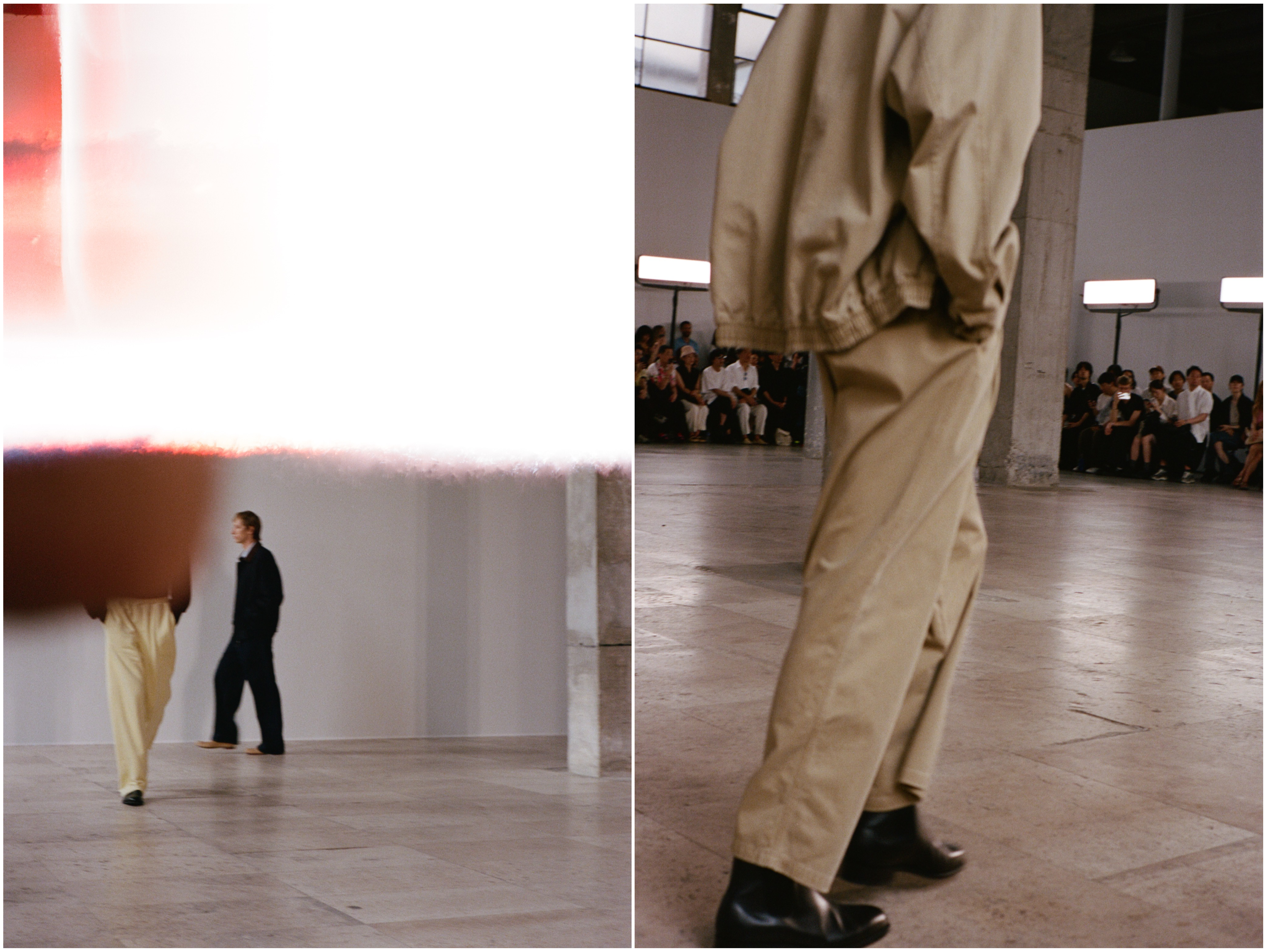
When I think about luxury menswear, if someone who had never cared about fashion asked me what it should look like, this is probably where my mind goes. That, or the Denver Nuggets guy.
SS27 connected naturally to previous seasons while introducing enough new silhouettes and ideas to keep the pendulum moving forward. That’s probably where I differ from Auralee.
With Auralee, I pretty much know what to expect. There was a period where I absolutely loved what they were doing, but now I don’t really look to them as much anymore. The sizing has never felt particularly inclusive, their pricing can be quite high for something relatively simple in its construction or fabric (e.g. $400CAD for brushed cotton tees), and stylistically they no longer inspire me the way they once did.
ssstein is the opposite.
The fabrics are excellent, the pricing feels fair, the sizing works surprisingly well for someone my size, and creatively I find myself coming back to the brand for inspiration. Whether it’s sophisticated dressing, everyday outfits, or something a little more playful, there’s always an idea I walk away wanting to try myself.
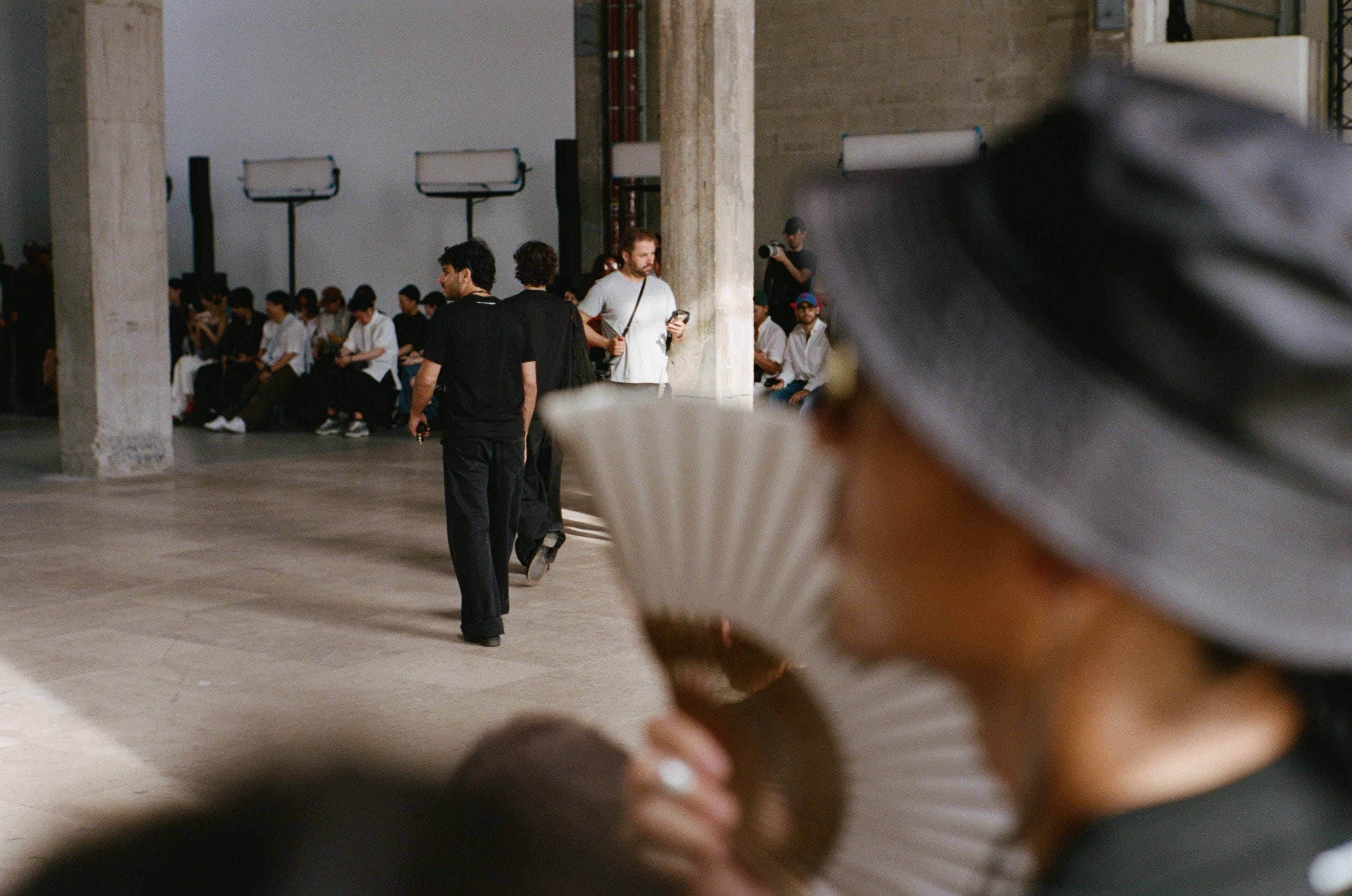
There isn’t a season that goes by where I’m aggressively seeking something by the brand.
Recently I read an article arguing that ssstein and Soshiotsuki have become the new pinnacle of Japanese menswear, and honestly, I think I agree. Both brands feel elevated without becoming inaccessible, staying true to their ethos while still pushing things forward.
For me, this was an absolute hit. But, saying that, it would be nice to see Kiichiro bring back some of that risk-taking from previous collections, paired with the confidence he’s built over the last few years.
Credits:
Words by Chris Maradiaga
Photography by Peter Sherno
Perfectly written and beautifully captured
Great juxtaposition between the ssstein and Auralee shows. Spot on