


If you’re enjoying Duchump and want to help make coverage like this possible, please consider subscribing.
Your subscription keeps this project alive and independent. At a time when much of fashion media is driven by traffic, affiliate links, and advertising, I want Duchump to remain a place for thoughtful reporting and honest criticism.
Thank you for your support.
(Last Edited, 9AM PST — July 6th: Hyperlinks, changes to a few sentences. I’m still tired and jet-lagged from this trip, sue me.)
Letter from the Editor
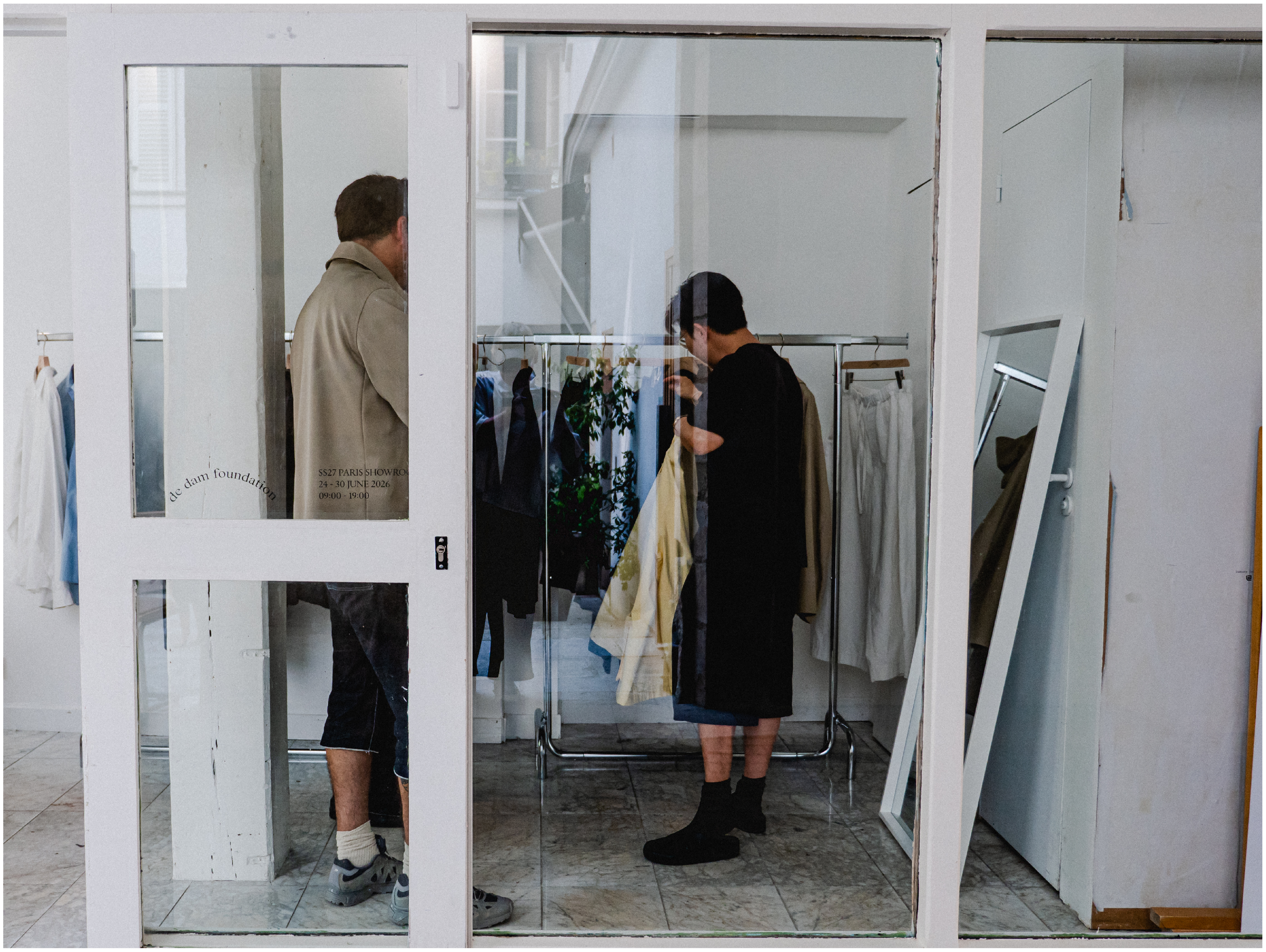
While this interview was being formatted by our contributing writer, I had the pleasure of visiting John Ro at his showroom during Paris Fashion Week SS27 to see the collection in person, while also having a friend of mine, Mackai Sharp, photograph the space for this piece.
The reason I keep coming back to De Dam Foundation, and why I’ve desperately wanted to own one of John’s pieces, is because of his commitment to quality in his collections. That, and our conversations never cease to amaze me. He’s one of the more honest, open, and knowledgeable people I’ve met throughout my trips to Paris Fashion Week.
He’s also known as Porsche Guy, but we can dive into that at a later date.
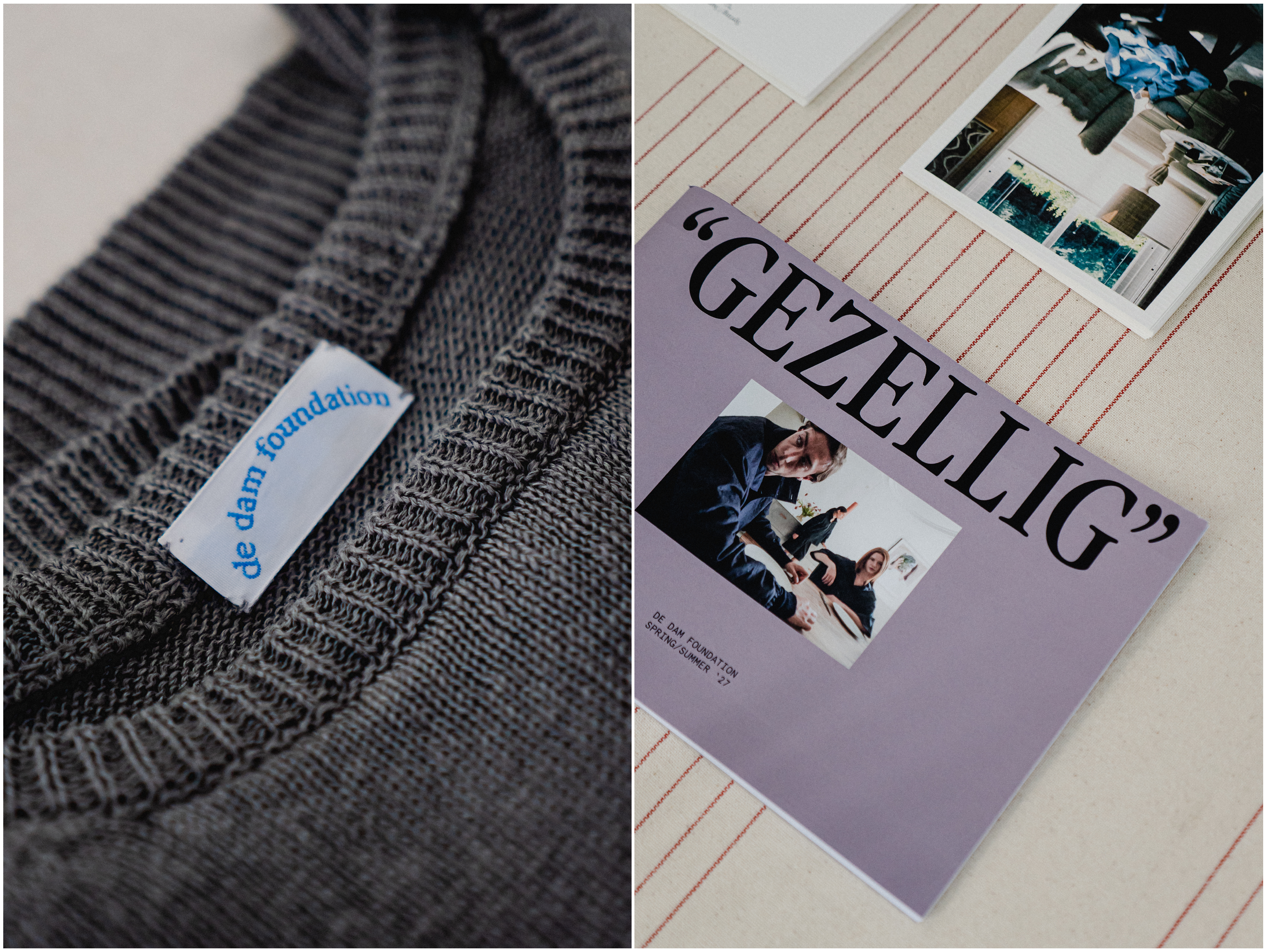
As for the result of that commitment to quality, well, you get a beautifully made collection, consisting of clothes that feel like luxury without ever feeling overdone, or over-designed. All while simultaneously being able to flatter a wide-range of body types through his one-size-fits-all sizing. He prides himself on the fabrics he uses, sourcing the majority of them from Italy and Japan. This season, he introduced a few lightweight knits (seen below), all three being made in Italy through a small, family-run operation.
Out of curiosity, I asked him how it’s been working with this particular mill.
“It’s incredibly technical, knitwear is a completely different world compared to woven fabrics,” he says. “They’ve been invaluable in helping me develop these pieces.”
SS27 introduces a welcome dose of colour to De Dam Foundation. One of my favourites was a butter-yellow jacket that sat somewhere between a classic chore coat and an artist’s smock. That, alongside the lightweight linen sweaters, which come in washed grey, navy, and brown, were among the highlights of the collection. John also showed me a standing-collar zip blouson (message me for pics u lil freak), which I believe was cut from a lightweight black wool. If he’d had an extra sample lying around, I probably would’ve walked ran out of the showroom wearing it.
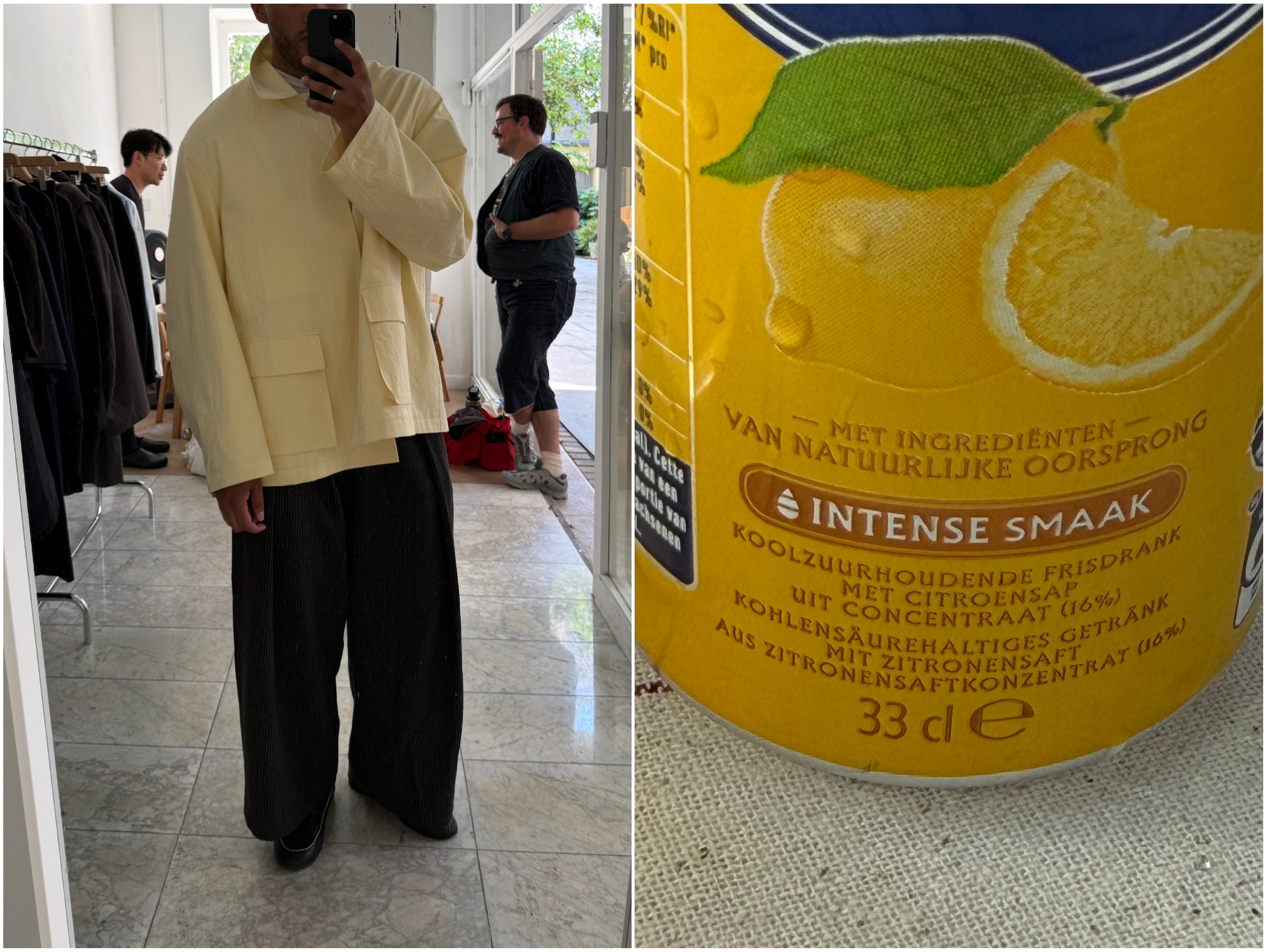
The collection strikes this satisfying balance between luxury and practicality. Everything feels sharp and sophisticated, yet these are garms you can wear in almost any setting, rain or shine. Well, ideally not rain, but you get what I’m saying.
The season-less approach is something I’ve noticed from several smaller designers over the last six months. Designers like Gabriela Coll and Gajiroc, both heavy hitters in the Duchump-verse, seem less interested in reinventing themselves every season, and instead, prefer building collections that naturally integrate with one another. Refining existing silhouettes through new fabrics, subtle construction changes, and thoughtful finishing details.
When I asked John where his inspiration comes from, he explained that each collection begins with a different aspect of Dutch culture and how it can be translated into clothing.
“Every collection I’ve brought to Paris since SS26 has started from a different piece of Dutch culture. The first collection looked at Dutch fishermen’s clothing. I found it interesting because people often associate wide, baggy workwear with Japan, and while Japanese workwear has absolutely been influential, Dutch fishermen in the 1800s also wore incredibly wide trousers because they needed flexibility while working on boats. It was entirely based on practicality.”
That sense of practicality is important to the Dutch, and it appears to be rubbing off on John. The Dutch are honest, straightforward, and don’t have much time for bullshit. “I’ve been told I’m very direct too,” he laughs. “I think living in the Netherlands made me that way. I wasn’t like that when I lived in Korea.”
It’s also one of the many reasons I enjoy spending time with John. There’s no room for fluff. We can be direct with one another, have honest conversations, and move on. It’s refreshing, especially when you’re working in an industry that can sometimes feel like you’re constantly walking on eggshells.
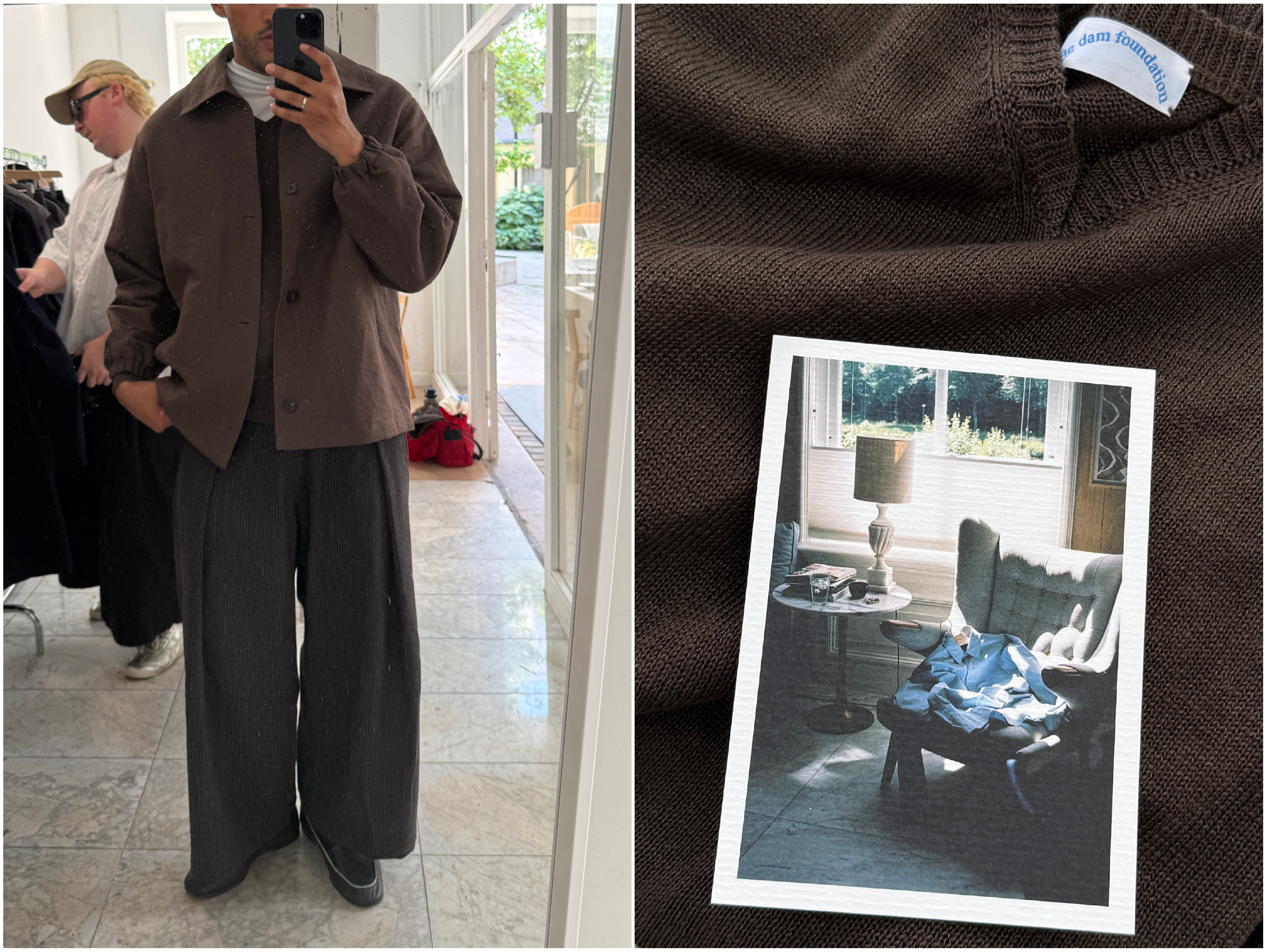
I’m excited to see where De Dam Foundation goes from here. Having seen John’s last two collections, and after hearing the amount of thought, research, and care that goes into each collection, I won’t be surprised if he starts turning more heads real soon.
All in due time.
- Chris
Interview by Edward Luetkehoelter
Photography by Mackai Sharp
As we head into the endless bustle of Fashion Week, throngs of Blazy/Chanel acolytes bumping into one another and trying to get into afters, we figured it would be worth chatting with someone whose work behaves as a foil to the rush. For this, John Ro is the man.
As Founder and Creative Director of De Dam Foundation, his work upends the conventions of ready-to-wear by offering all his garments in a single, one-size-fits-all unisex cut, all while being grounded in a curious and deeply social inclination towards the many intricacies of Dutch culture.
He also offers some of the best trousers and blousons on the market, and an invariably sunny disposition. Talking to him was the highlight of my day, and, if you had the chance to visit his showroom in Paris, I know you’ll feel the same.
We chatted about Dutch fishermen chopping up their clothes and turning polder fields into trench coats.
How’s your day going?
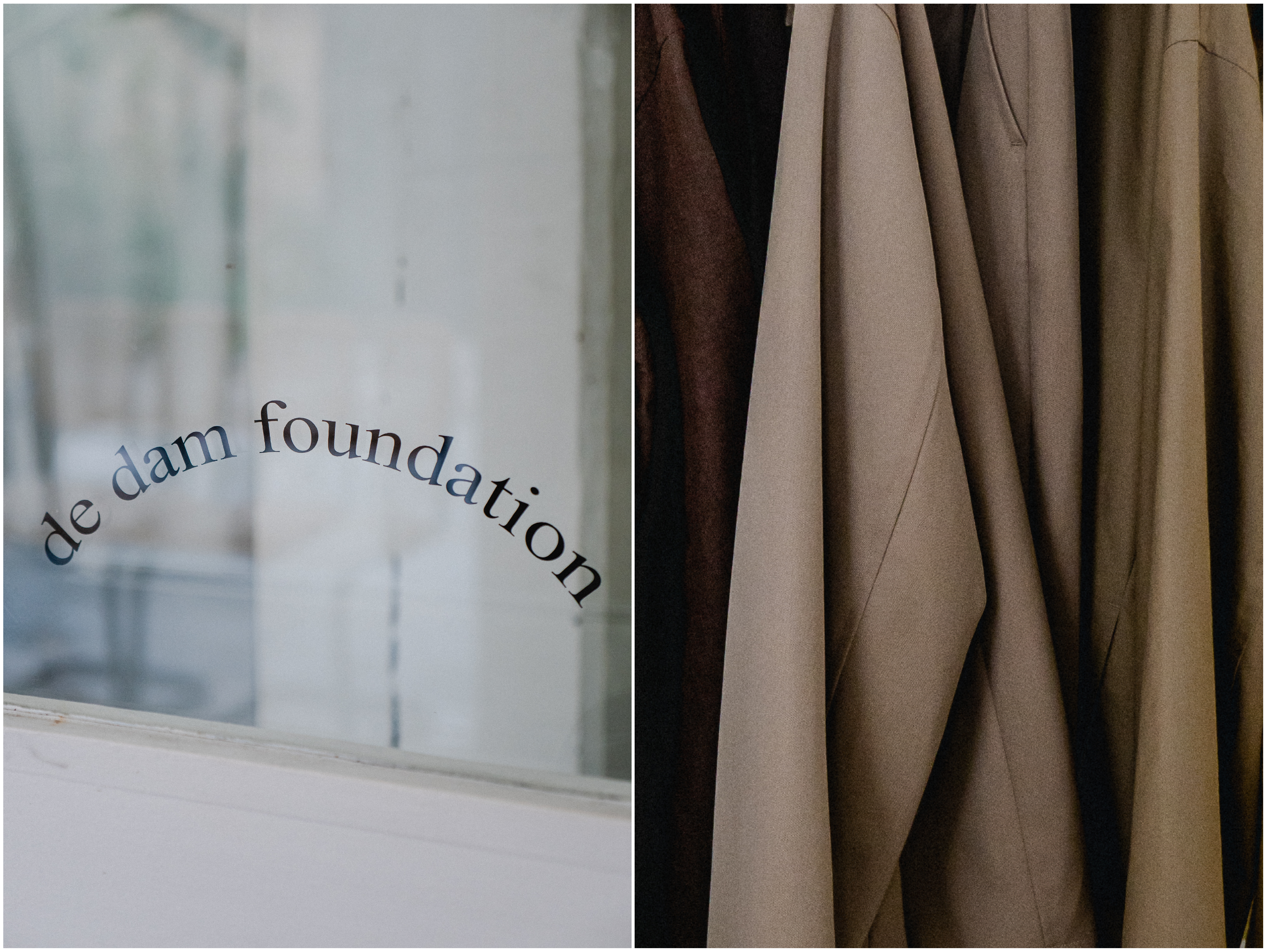
John: I’ve been quite busy, I would say. It’s all those last minute preparations for Paris. Picked up these window stickers that I had to put my logo on, and the dates on it, etc. Had to do some last minute shopping to set up the showroom.
Also, about an hour ago, before I had dinner, I was looking at some fabrics for the next season.
I’m trying to stay a little ahead of schedule because it’s a one person brand. I won’t survive if I don’t have a structured plan before entering a season. Luckily, I already have an idea of what I want to make. Design will hopefully shape a little more in July and I could start patterning it.
Is it too early to share what that inspiration is?
John: No, I can share a little.
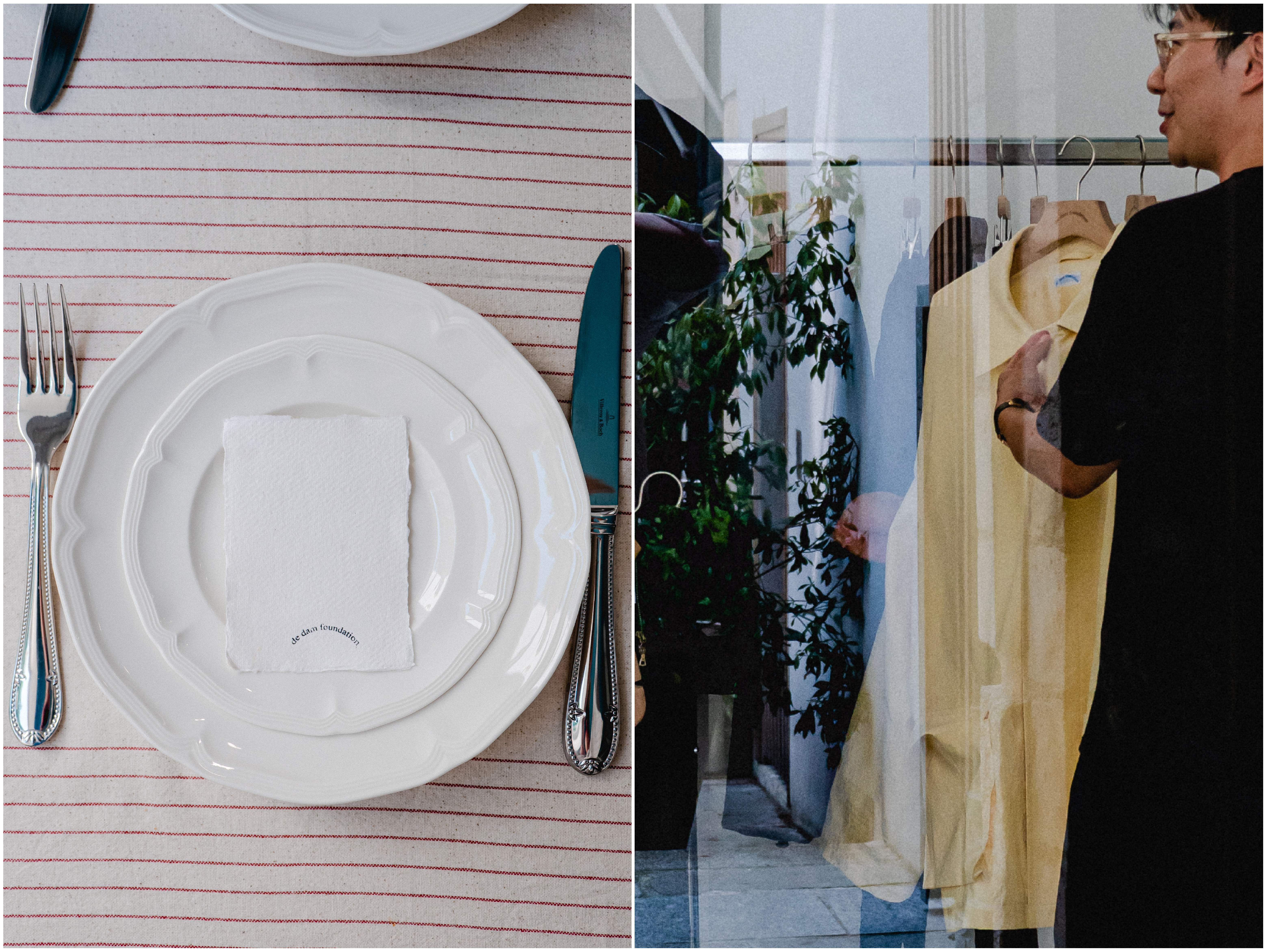
A lot of my inspiration comes from the Netherlands. AW27 will continue SS27’s Dutch coziness theme, but expressed through a different setting.
I find a lot of interesting aspects in Dutch culture, especially the way people used to dress here. Before the Netherlands became as modern as it is today, there were many more traditional industries. There’s a rich history of agriculture, textiles, architecture, and design in this country. Those professions are still here, of course, but industries like textiles and agriculture have changed quite a bit over time.
In the Netherlands, especially in agricultural regions, people had very distinct ways of dressing. Their workwear was designed with purpose and function. Dutch fishermen’s trousers, for example, were intentionally made very wide because they needed freedom of movement while they worked. Although it was workwear, you could still wear it to social occasions because it never looked like clothing that was only meant for work.
I really love that idea. A garment that can be worn for every occasion.
For AW27, I’m actually a little obsessed with the Dutch realist painter Anton Mauve. He painted many scenes of Dutch farming life and the clothing people wore during that period. I really love the colours he used in his paintings, and they’re going to play a big role in the palette for the next collection.
Is there going to be a lot of workwear materials then — denim and canvas?
John: I’m looking at some workwear materials like denim and canvas, but they’re only part of the picture.
My brand reimagines what people used to wear by bringing those familiar forms into a contemporary context. That means I mix sturdy workwear fabrics with more delicate natural fibres to explore how those garments might look and feel today. I work almost entirely with natural materials because that’s what you find in historical archives. There were no synthetics back then, and I like honouring that simplicity, using wool, cotton, and other long-lasting fibres keeps each piece grounded, durable, and able to age well over time.
For me, it’s about balancing refinement and practicality, reshaping everyday clothing for this century while preserving the qualities that made those garments timeless in the first place.
I was just looking at your Typewriter Shirt. It’s both a very hard-wearing product that is fitting for workwear, but it’s also something you could wear to the office because, well, it’s a really beautiful shirt.
Also, how do you spell that Dutch word for “cozy”?
John: G-E-Z-E-L-L-I-G.
I’ve really been impressed by your emphasis on the practical Dutch lifestyle.
One other thing that I think is going to be immediately apparent to anyone looking at your work is the genderless sizing and styling. What was the impetus behind that? How do you get that to work?
I imagine there’s some complex patterning involved. I saw with the pants there's a tucked away elasticized waistband.
John: Yeah, good question. Let’s start with the inspiration behind it.
My wife and I have been sharing clothes for years because we’re similar enough in size. She would borrow my sweaters, and I’d borrow pieces from her wardrobe. It made me realize how nice it is when garments aren’t restricted by gender. That experience really became the foundation for how I wanted to approach the brand.
There are some really great unisex brands out there with interesting pattern-making that accommodates different body shapes. I think pattern-making is one of the most important aspects of designing a unisex brand. When it came to sizing, I started looking into the history of it. I learned that standardized sizing is actually a very modern concept. Before the 1800s, there wasn’t really a sizing system at all. Early ready-to-wear sizing only emerged through military uniforms, and even then it was extremely limited.
When I researched Dutch fishermen for one of my first collections, I found the same thing. Their jackets and knitwear weren’t sized in the way we think about sizing today. People wore what was available, adjusted it, altered it, and used it for work. Clothing was utilitarian and purposeful, it wasn’t categorized.
I wanted to bring some of that spirit into my own designs.
Making everything one size certainly simplifies production, but it actually makes the pattern-making much more complex. You have to make sure the garment feels intentional, rather than looking like someone is simply wearing a shirt that’s too big for them. With the Typewriter Shirt you mentioned, for example, I added pleats across the back panel to control the volume, and enlarged the yoke so the shoulders and back sit more naturally. Those small decisions help the shirt work across different body types.
I also build adjustability into many of the garments. Jackets have elastic or adjustable waistbands so the wearer can shape the fit themselves. The trousers use an elastic waistband for the same reason. Those details allow the garments to adapt to the body, rather than forcing the body to adapt to a fixed size.
Ultimately, the goal is to create clothing that’s adaptable and comfortable, while still being carefully patterned with a refined silhouette.
You mentioned Dutch fishermen earlier as the inspiration for your first collection. Was there a lot of historical research there?
John: Yeah, for sure. A lot of book-reading on that topic. I’m a bit of a history geek, so once I start reading about a topi,c I get completely absorbed in it.
To get some interesting facts about the Netherlands, I also learned a surprising amount from boat tours. The older guides who run them always share these funny, sometimes questionable, but very charming, stories about the Netherlands. Those little details helped me understand the atmosphere of the place in a different way.
I’ve lived here for quite a while, but coming from South Korea gives me a slightly different perspective. I think that mix of distance and curiosity helped me see Dutch culture with a bit of fresh eyes, which shaped the direction of the brand.
It’s interesting that you bring up fishermen’s tales. Stories that may or may not be true. In a way, I think that says a lot more about any given culture than just the facts themselves.
Your website mentions an architectural element to your clothing, and I think it really fits that bill. They’re functional and built to be lived in by all sorts of different people, given your unisex sizing.
How do you find architecture informs your work?
John: Dutch architecture has always influenced the way I think about clothing. The culture here is really focused on practicality and usability. Buildings are designed to be lived in, not to show off.
There’s a preference for straight lines because curves often create dead space that cannot be used. That mindset translates naturally into how I design garments. I think clothing should work the same way. There are incredible, expressive designs out there, especially during fashion week, but for me, a garment still needs to be wearable.
Dutch architecture is straightforward and functional, and I want my clothes to carry that same idea. They should feel purposeful, adaptable, and easy to live in, while still being thoughtfully constructed.
At the same time, there’s also a landscape-informed approach to your design process, especially for your capsule collection De Polder. Could you tell me a little more about that?
John: Definitely.
The trench coat was inspired by the Dutch polders. If you’ve been to the Netherlands, you know how incredibly flat the landscape is. These flatlands are called polders, and they have a very particular atmosphere. My friends Joachim and Chris run a creative agency called Another Something, and they suggested doing a collaboration based on that landscape, and the idea immediately made sense to me.
At the time, I was developing a trench coat pattern, and I kept imagining a solitary figure walking across the polder. It can feel very isolating out there, especially when it rains, which is often. That image shaped the direction of the coat.
We chose a colour that reflects the mood of the landscape, a greenish khaki with a subtle orange hue. On dark, rainy days the fabric looks deep and muted, but when sunlight hits it, it becomes something else entirely. There’s a gentle sheen created by an orange thread woven into the fabric, giving it a warm reflection in the light.
The goal of that capsule was to capture the feeling of the polder itself, that shift between bleakness and quiet beauty, and translate it into a garment.
I’d imagine these are garments you could eventually pass down as heirlooms. They’re meant to last a long time and fit many different people.
John: Yes.
When I look at my own wardrobe, the pieces that have stayed with me the longest have always been the simple, classic ones. I went through phases of sneakers and streetwear, but those were very trend driven. The things I still wear today are pieces like an old Barbour jacket that I bought fifteen years ago. It’s not flashy, but it’s lasted, and it still feels right.
The core principle of any garment is that it should be something you can wear whenever you want, and that it should fit naturally into anyone’s wardrobe. That idea connects to the unisex and one-size approach that De Dam is going for as well. One size can be tricky to get right, but once someone trusts the fit of a brand, they tend to stay with it.
My goal is simply to create pieces that feel timeless, adaptable, and long-lasting, so they can live with someone for many years.
You have a very refined scope of clothing. You have one button-up shirt, and it’s great. You have a trench coat, and it’s great. You have a handful of trousers, and they’re all great.
How do you decide which garments you’re actually going to produce while keeping the catalogue so focused?
John: I usually begin by sketching a lot of ideas before making anything.
For AW26, the inspiration came from the way Dutch architects dressed. I looked at how architects in the early 1900s wore their garments on construction sites, in their offices, and at public events to understand the practicality behind their choices.
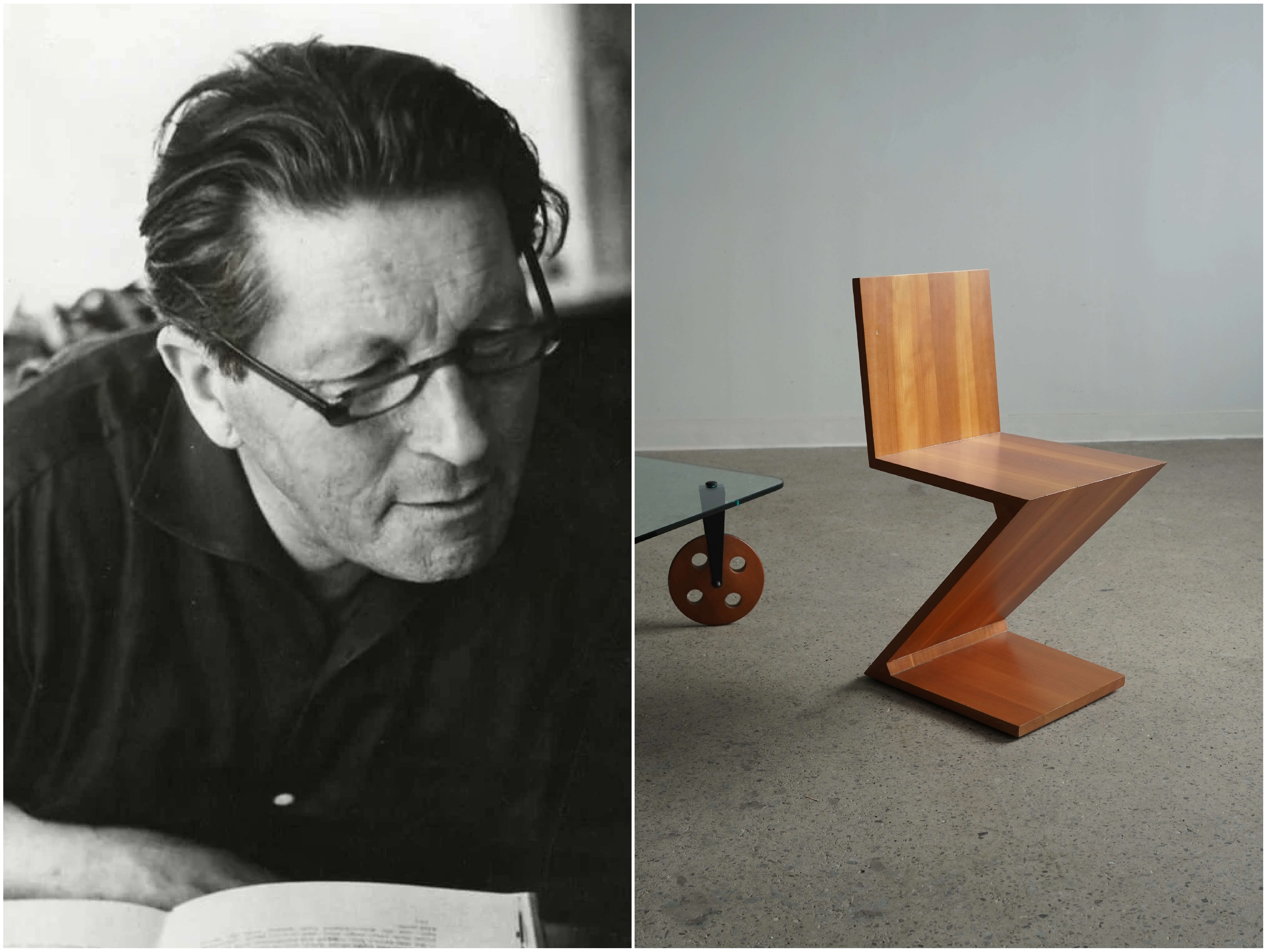
Someone like Gerrit Rietveld, who designed furniture and buildings with a strong focus on function, made me think about what he himself might have worn. I imagined he would choose clothing that served multiple purposes and supported his work.
That mindset helped shape the pieces in the collection, and it turned out to be true!
Architects back then really were wearing very simple garments that worked for almost every occasion. Their clothing was practical and unfussy, which confirmed the direction I was imagining for this collection. I also spoke with current architects today, including a close friend of mine, to understand how architectural work has changed, and what they actually wear today. They used to be on-site much more, but now, most of the work happens behind a computer.
I asked them what their ideal garment would be today, and from there I designed pieces that could fit into the modern world, while still referencing the past.
For SS27, I spent a lot of time talking with Dutch people about their gezellig moments. I wanted to understand what they wear to those occasions, from casual gatherings to events.
One piece I’m excited about is a tracksuit. Dutch people love football, and comfortable tracksuits are something they wear everywhere, from the supermarket to grabbing a beer. I wanted to re-interpret that and create a more refined, luxury version of something so familiar.
That is how I decide what to design and make. I keep the catalog small by focusing on pieces that feel culturally rooted, relevant to the theme, and genuinely wearable today.
The materials you use seem fantastic. I noticed the vast majority of your textiles are from Japan, aside from an Italian fleece, and you recurrently use buffalo horn from Germany
Have you built relationships with the same mills and producers, or do you tend to switch things up each season?
John: For buttons, I always work with the same supplier in Germany. I found them early on, and they were very easy to work with in terms of minimum orders. The quality is great, and I love the design. The button is very flat with a bit of volume at the edges, which makes it minimal, but still easy to use. It is a small detail, but to me it feels perfectly designed.
With fabrics, it depends entirely on what I’m looking for each season. I order a lot of swatches to see how the material actually feels and how it works with my sketches. I don’t stick to one mill, although certain regions are known for specific strengths. Italy is incredible for wool, especially suiting and coat fabrics.
I also work with regional fabric agents who help source materials from different mills. At the moment I have two agents in Italy, one in France, one in Japan, and one in Korea, and they send me a wide range of options to explore.
I’ve worked with them for quite a while now, and they’re amazing. They know what I like, so their recommendations are usually very good.
How many people work under De Dam Foundation?
John: It’s Dam small. (laughs)
It’s a very small operation, mostly just me.
I handle all the design work, and although I used to do all of the pattern-making myself, there is simply too much to manage now as the collection is growing, so I work together with a pattern-maker in South Korea. I also collaborate with manufacturers who help with sampling and production.
Everything else, from the design process to packing and shipping, comes directly from me.
When someone orders from De Dam Foundation, they’re receiving something that is fully prepared by me. That part of the process is something I genuinely enjoy. It feels good to send out something I have created from start to finish. That's the part I think that I enjoy the most out of the brand. It feels really good to be able to showcase what I've done, you know?
Is there anything else you’d like to cover?
John: One thing I find interesting about the brand is the perspective behind it.
I’m a Korean designer running a brand inspired by Dutch culture, so I’m not the most traditional representative of the Netherland, but I think that’s exactly what gives me a unique perspective. When I started the brand, I noticed that many well‑known Dutch labels, like Patta, are incredible but often focus on different themes. There were not many brands talking about the Netherlands itself.
It’s known for more than just tulips.
That is what motivated me. I wanted to explore Dutch culture from my own point of view. Because I am a bit of an outsider, I tend to notice small details that people who grew up here might overlook, or take for granted.
That mix of distance and curiosity is what shapes the identity of the brand.
I just noticed the Helvetica book on your shelf. Dutch typoface is such an important part of design history. Have you pulled any inspiration from that?
Your clothing feels similar in a way. It’s kind of modular, kind of architectural.
John: I wouldn’t say my clothes are modular in a literal sense, but I do think a lot about how each season connects to the next.
I try to keep the colour palettes consistent so that pieces from different seasons can be worn together. I often see big brands create incredible collections, but the seasons shift so dramatically that you can’t always match something you bought last year with what they release now.
I want to avoid that.
If you buy something from me this season, it should still work with something from two seasons ago. In that sense, the collection becomes modular. Each season introduces something new, but it should feel like a natural addition to your existing wardrobe. I also know that people will mix my pieces with other brands, which is completely normal. Someone might wear pants from a different brand and pair them with one of my shirts.
My goal is to make clothes that blend easily and feel timeless, because that is what helps a garment stay in your wardrobe for a long time.
This collection was unreal. Trenches coming in aw26 too - can’t wait!