


If you’re enjoying Duchump and want to help make coverage like this possible, please consider subscribing.
Your subscription keeps this project alive and independent. At a time when much of fashion media is driven by traffic, affiliate links, and advertising, I want Duchump to remain a place for thoughtful reporting and honest, at times chaotic, criticism.
Thank you for your support.
Sleep started to feel more like a fictional concept the longer I stayed awake.
I’d count more sheep than I’ve ever seen in my life, I’d slow my breathing down while listening to a man, who very closely resembled Jesus Christ, repeat affirmations to me and 300K viewers, hoping to get even a half hour of rest.
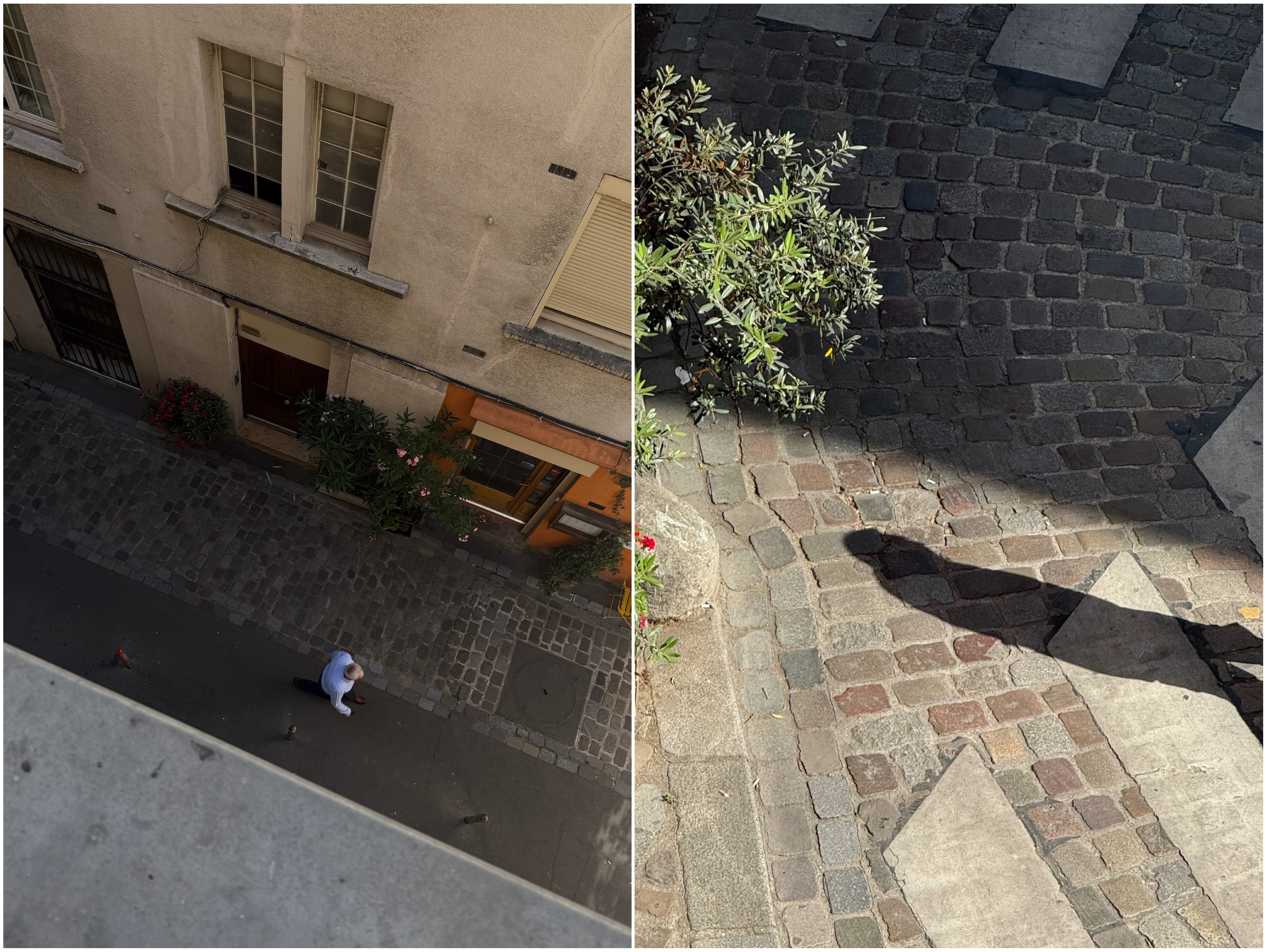
I wonder how many of those 300,000 viewers are also struggling to sleep. Or, maybe they’re simply in it to watch faux-Jesus tell them how they are deserving of massive financial gain. So far, these affirmations have yet to come to fruition, but maybe if I listen to his video again at a certain volume/frequency, it’ll hit.
Another hour would pass, yet I’m still awake. Not in a calming, zen type of way, but instead in that dizzying state of disassociation that only comes from a severe lack of sleep. Eventually, once it became socially acceptable to be outside, I’d step into a freezing cold shower and start thinking about what I was going to see that day.
Even if I felt like a shell of a human, I was still determined to drag my lifeless body around Paris (think Weekend at Bernie’s, but in Paris and in nicer fits) in search of the latest and greatest in menswear.
This process, whether here in the city or at home behind my computer, can be surprisingly exhausting. There is too fucking much out there. You start feeling a little crazy digging through countless product pages, flipping through Instagram accounts, visiting shops, and hoping something eventually clicks. After an hour or two, you kinda just want to stand up, have a fizzy drink, or have a cigarette if you’re hard as fuck (I am not).
Anyways, my trips to Paris Fashion Week have become as much about catching up with friends and previewing collections from brands I love as they are about finding lesser-known, newer voices to feature and write about. People with something to say, even if their garments might look deceivingly simple at first glance.
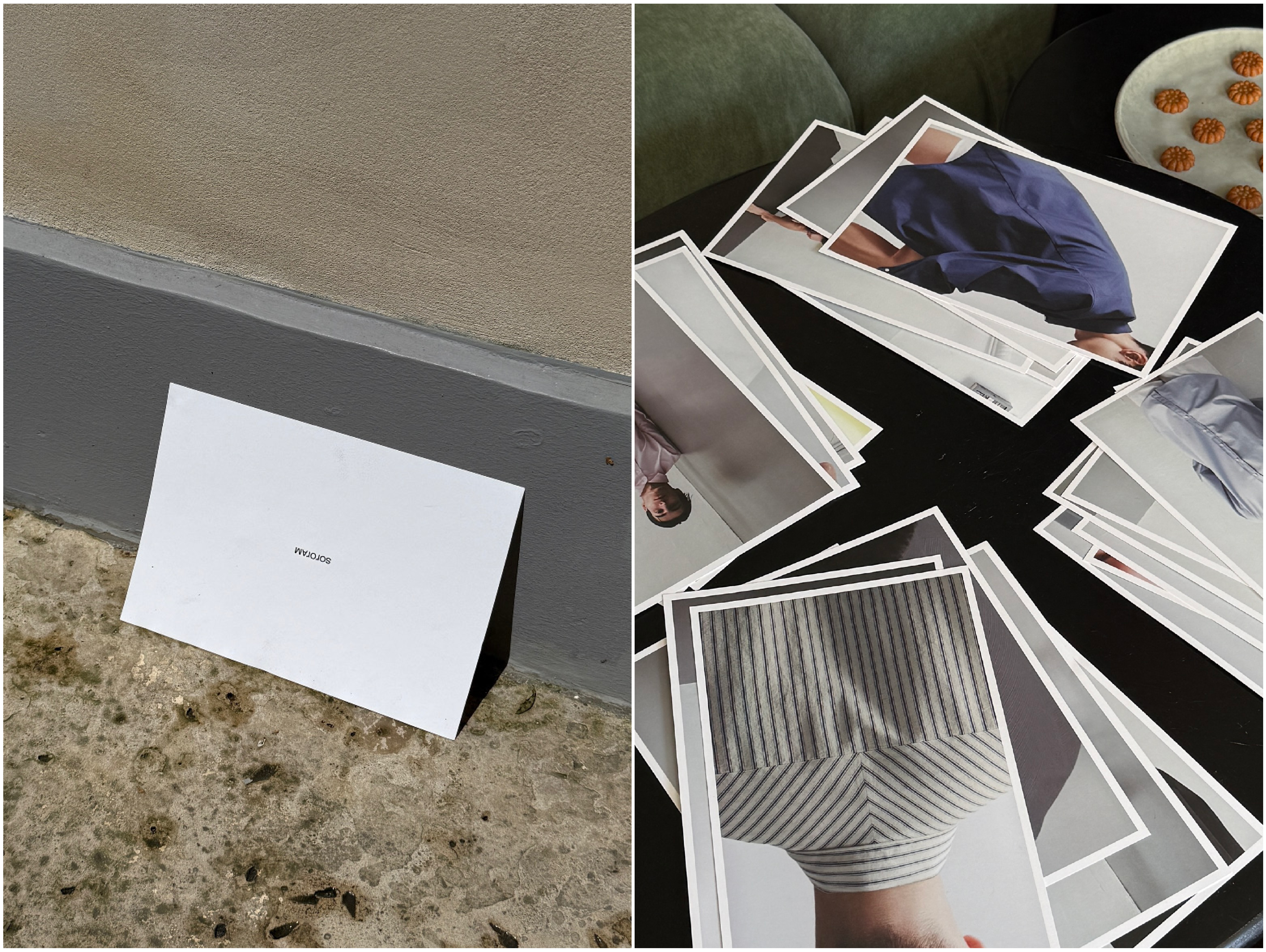
For SS27, I had the pleasure of receiving a DM from Hyunjoon Choe, founder of the Korean label Sororam. He’d known about Duchump for some time and thought it’d be great to connect. Truthfully, I’m grateful he reached out because this visit ended up being one of the highlights of my trip.
(Also, and not to toot my own horn here, but he only wanted one member of the press that week, and he wanted me. Sorry BBSP, Wardrobe, Highsnobiety, Present Forever, Wimpy, etc. Love you all, but I’m taking this W.)
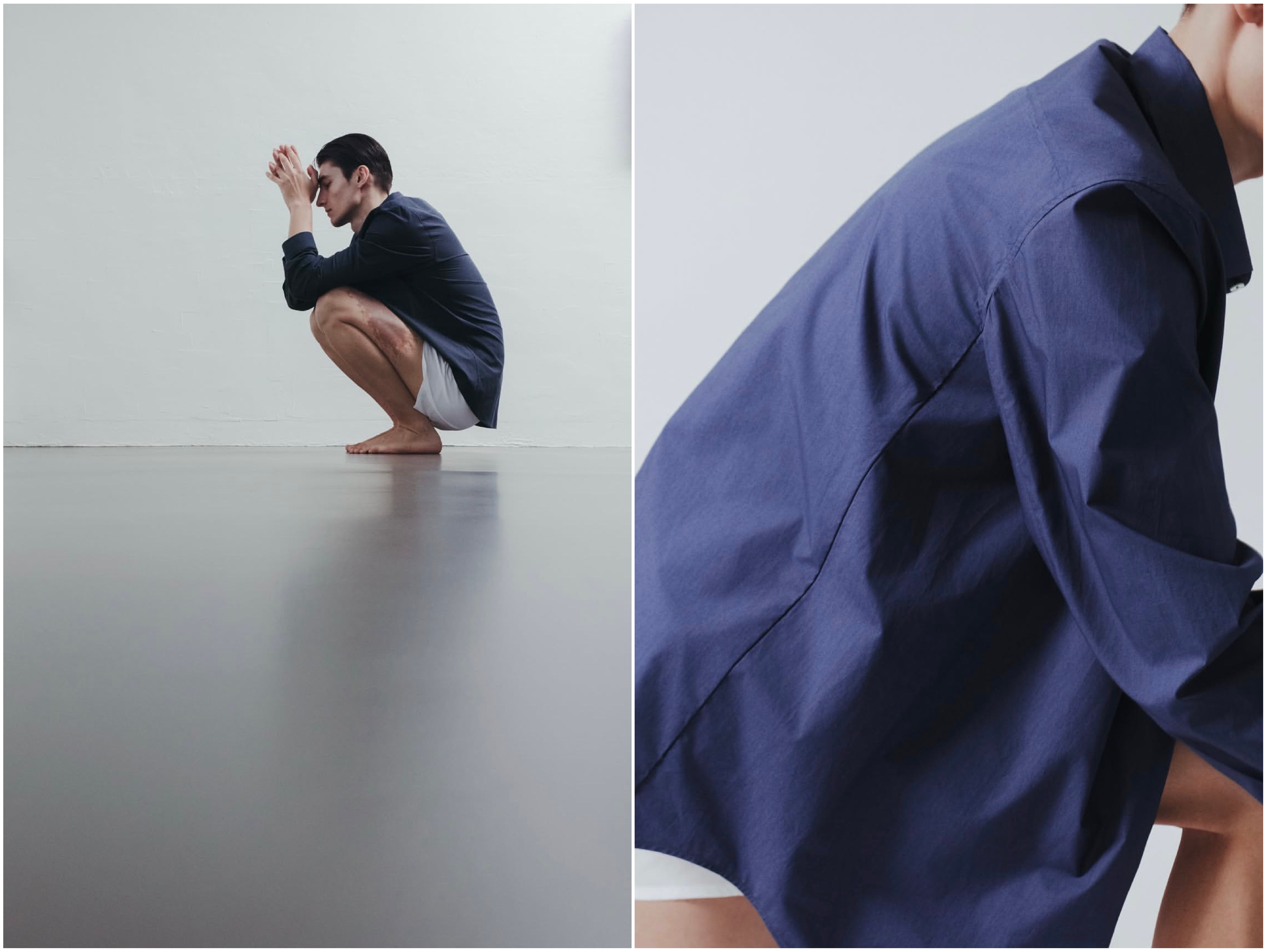
With Sororam, Hyunjoon’s ethos is “one exceptional design per category.” While that isn’t exactly a new design philosophy, it’s one I appreciate in a world where we see more fashion waste than we ever should, and in an industry constantly chasing trends and newness. For now, Hyunjoon is focused solely on shirting. Getting the feel right, removing anything unnecessary from the construction, and thinking equally about the present and the future.
These are shirts meant to live long, fruitful lives, worn for everything from a bitchy walk to celebrating your friend getting a BBL, or something. I don’t know, I don’t really go out much, okay?
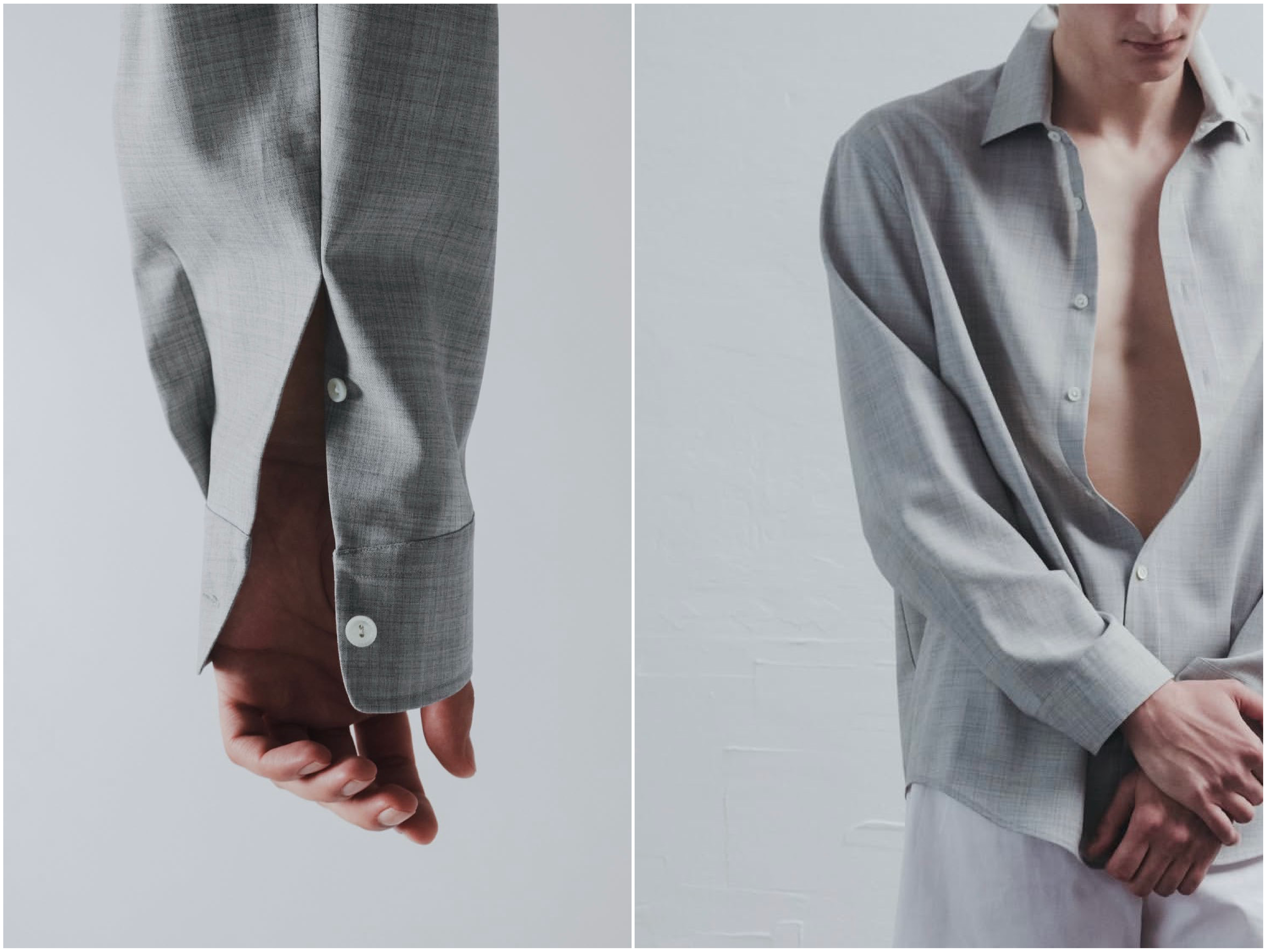
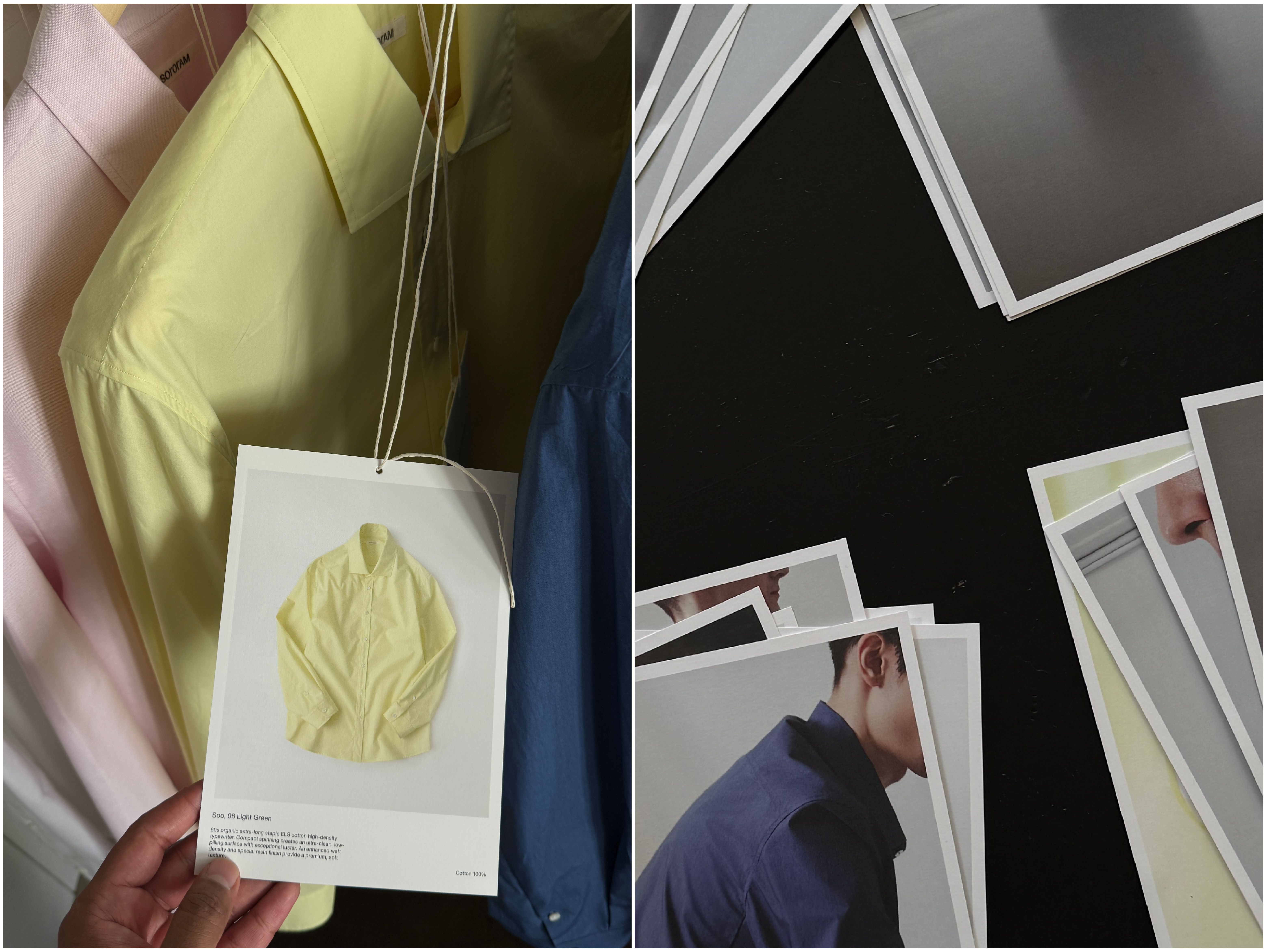
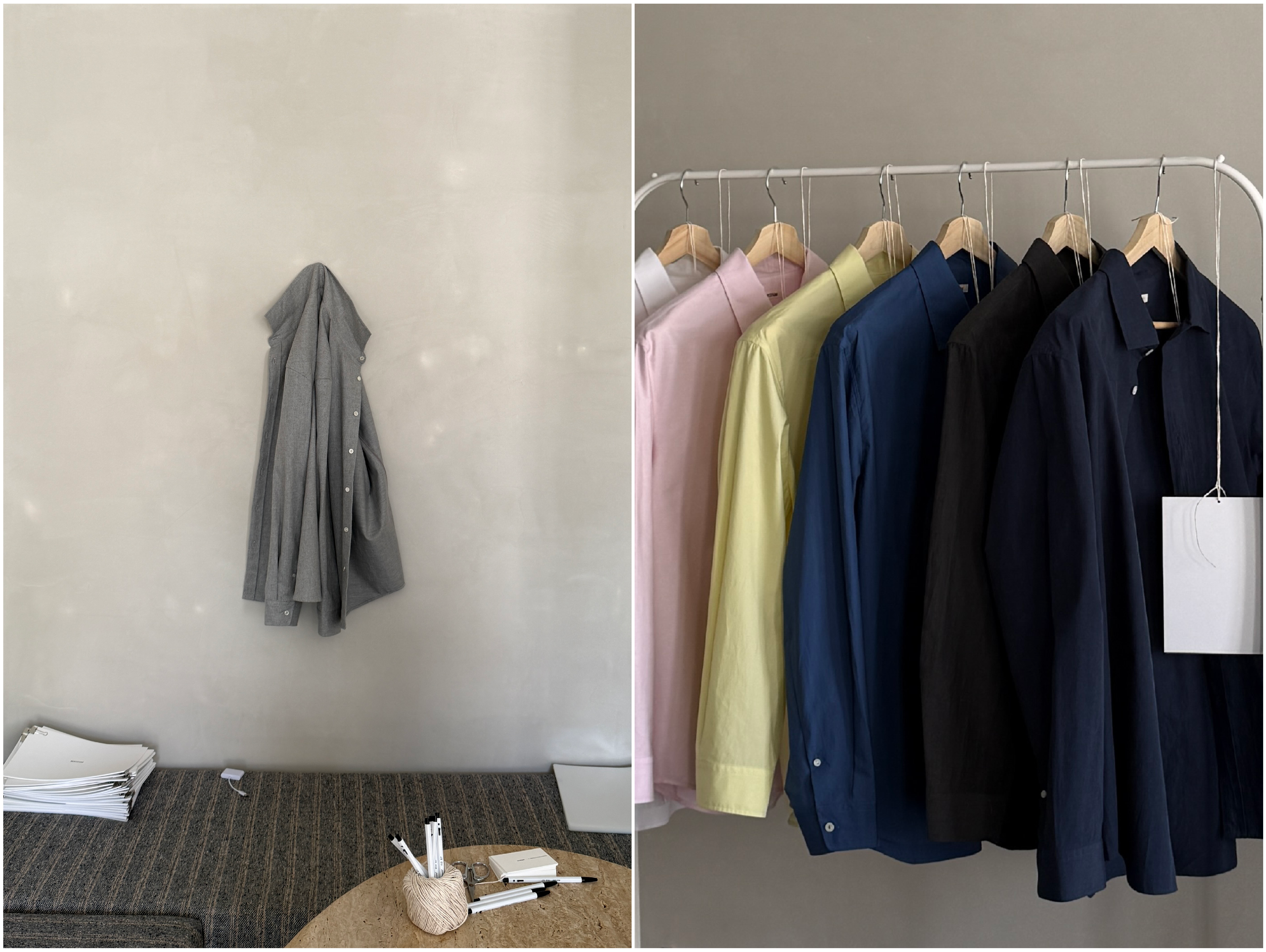
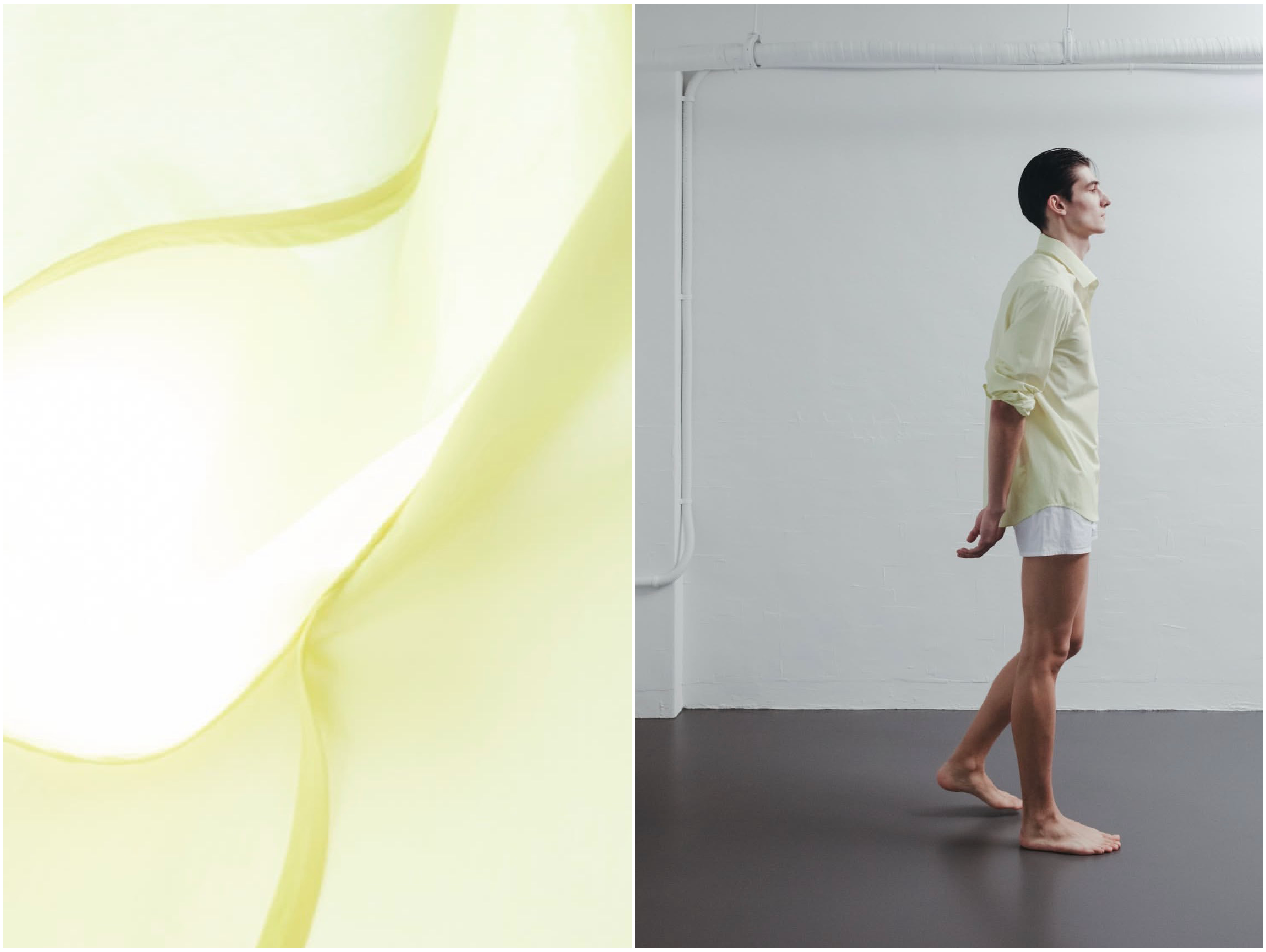
This season, though Sororam feels more like an ever-evolving wardrobe than one built around traditional seasonal collections, we saw familiar shirts reimagined through different fabrics. Silk-cottons, chambrays, tropical wools, oxfords, with colours ranging from a classic Duchump palette of dreary greys, partly sunny blues, midnight blacks, to light pinks (colour of the season), Easter yellows, rich blues, and crisp white oxfords.
Overall, these are shirts that might read as classics at first glance, but it’s the construction that helps them stand out. As I mentioned, Hyunjoon is always looking for ways to remove whatever isn’t needed, creating a looser, more comfortable silhouette. While some brands love to brag about their technical prowess, sometimes it feels like they’re turning an otherwise simple shirt into a technical masterclass just for the sake of clicks, or to prove they can.
Personally, I’m impressed by the opposite. By someone stripping away the clutter and creating something sharp, focused, without any fluff. Something enthusiasts can appreciate without it having to scream for attention. The pendulum might be swinging back towards bigger, louder, flashier clothes, but not for me.
With appointments lining up from several high-profile buyers, I don’t think it’ll be long before Sororam becomes a much more familiar name within menswear circles. To kick off that transition, I sat down with Hyunjoon to record our conversation while looking through the collection.
Just two people talking.
(We kinda got right into it. So, enjoy.)
H: Yeah, last season was a bit calmer, and it was my first season.
The original idea of Sororam was to make only one product per category, which means only one colour, only one fabric. I had to find one exceptional fabric for this design, along with a colour. Naturally, I went with white since it’s classic.
However, last season I was talking with an agency in Japan, and they said, “One product is fine, but you need variation. You can’t just put one shirt in the showroom and expect buyers to purchase it.”
At the time, it felt like a compromise of my original idea. I was a bit negative towards this, but now I’m actually very grateful they encouraged me to do that. Because I think these days, even though we’re saying one exceptional design for each category, one exceptional design with one exceptional colour and fabric feels too narrow of an idea. I have to respect one’s personality, and not force them to wear this.
You know what I mean?
So, this is our Spring/Summer collection. Personally, I don’t really think of it as SS27, I want to move away from thinking in seasons. At the same time, I’m still very new to the industry, so I have to follow some of the rules. I tell buyers and press it’s SS27 because that’s how the system works, but I don’t really tell customers that. A buyer could still be selling this shirt five years from now.
To me, it’s seasonless.
This season, I wanted more of a pop in colour since last season was very calm, so we added brown, like the shirt that you’re wearing, a white option, and a grey. There’s also an indigo and charcoal one, too. Eventually, I found that it all felt a bit subdued, the atmosphere felt too down.
I thought maybe I’m going to try a bit more variety in colours and fabric instead. For example, our new stripe shirt, it’s not something I would necessarily wear colour-wise as it doesn’t fit my personality type. But, there are some people who would like this more than our standard white shirt.
That’s why I introduced more colours and different fabrics this season.
C: I think it really stands out. The pattern matching is gorgeous. It’s beautiful.
The factory that makes these shirts is, I would say, the best shirt factory in Korea. They’ve made shirts for several chairmen of a few major Korean companies.
The craftsmanship is exceptional, and the funny thing is, I didn’t even ask them to pattern-match it like this.
Really? You should take credit for that.
(laughs) What’s actually happening is something we call the “ghost seam.” We don’t have an incision line in the shoulder, we only have it on the inside. So, we kind of conceal the shoulder. This type of striped pattern isn’t going to stop here, it continues along the back and meets here.
This is one of our differences. Even though we’re doing “normal” shirts, we still want to make a difference.
Of course.
Sorry, I feel like I keep talking.
(laughs) No, no, no. Don’t worry, we’re just chatting.
No, you should stop me if I keep going.
Also, one more thing to note about our “ghost seam” detail is that there’s no seam between the main collar and the band collar. That’s just my personstal taste, it makes the shirt’s construction feel more luxurious.
When you look at a Bentley Continental GT, for example, on the back they don’t have many lines (idk the technical term for this) because they instead make the whole panel altogether. I think that gives me an impression of cleanliness.

That’s why, from the front, you barely see the seam here because I’ve shifted it towards the back. Then it continues and meets the seam on the sleeve.
It’s just a small detail.
I mean, that’s what stands out to me. At the end of the day it’s a shirt, but there are so many little details within it that make it feel different, refreshing. It’s not obvious until you take a closer look.
I also wanted to ask about your campaign. It looks beautiful, the imagery fits the brand very well.
Thank you.
Have you been working in fashion for a long time? What’s your story?
My personal story?
I studied fashion in Paris. I actually started at the Seoul campus, then transferred to Paris after I finished my military service. After graduating, I interned at IRO Paris. Then I went back to Korea and worked for Post Archive Faction.
It was just for one season, but it went very well. By the middle of last season, however, I realized I wanted to do my own thing. Even if it meant being broke, I still wanted to build something of my own.
I left the company on good terms and started Sororam last year.
That’s interesting. And when it comes to your personal design style, how has that evolved since then?
I don’t really agree with fashion’s current design language a little bit. I find myself looking more at product design, architecture, even automotive design. Take Apple, for example. They’ve been selling the iPhone for more than ten years, refining the same product over time.
Personally, I’ve never really understood why fashion always feels like it has to create something completely new every season. I understand why, it is fashion, but I think my way of thinking is a little different. I’m trying to create one product, not just “a shirt,” but this shirt, and continue refining it over ten years.
Of course it’ll change over time. If I find something that can be improved, I’ll update it. It’ll become the next version of that same product. That’s really the philosophy I developed from working in the industry, even if I wasn’t there for very long.
I actually feel like the direction you’re talking about is becoming more and more prevalent in menswear.
There are a lot of thoughts that come to mind, but I think over the last year and a half, maybe two years, we’ve seen this huge shift away from what was popular in menswear towards much more niche brands. People are paying attention to fabrics, construction, longevity, all of those details.
At the same time, we’re seeing more brands embrace a seasonless approach. I honestly think we’ve reached a point where we’ve moved past quantity. People are looking for quality now. There are brands releasing 100+ pieces every season, and that’s great, it might even be a beautiful collection, but it’s a lot.
As a designer, you’re constantly under pressure to invent something completely new every six months.
One hundred percent.
I’m actually working on trousers now. These are the first pair (a pair of light, khaki trousers that are soft, worn-in, and sit beautifully). I’m not completely satisfied with them yet. One thing I’m starting to do is remove as many seams as possible. There aren’t any unnecessary seams here, and I’m trying to integrate the pocket line with the belt loop as well.
I’m still working on the shape. I felt it was too bulky for me. I’m going to keep working on those, but for now...
That’s what I appreciate so much about brands like Sororam. You find something, a shirt in this case, and instead of coming up with an entirely new model, you keep refining the original.
That seasonless approach resonates with me. I don’t want this to sound like I’m preaching “slow fashion,” because that’s not really what I’m trying to say. I just think conversations around quality and longevity have become more prominent recently.
There are so many discussions happening online now. I’ve probably gotten into four or five different arguments over the last few months about it.
(laughs) I saw some of it on Reddit. I don’t really know the culture there, but I noticed something was happening.
I thought it was only Korean customers who argued like that online.
No, everywhere has people like that. It’s exhausting.
Over the last six months I’ve written four or five different pieces that basically boil down to, “Can everyone please calm down? It isn’t that deep.”
It feels like there are three different groups now. You have people who genuinely love clothing, they care about fabrics, construction and the brands themselves. Then you have another group who’s only interested because it’s trendy. And then both of them clash because one calls out the other for being too deep in it, while they get called out for being too trend-driven.
It’s an ongoing cycle, but that actually leads into something I wanted to ask you about.
One thread I’ve been pulling on lately is Korean fashion. I’ve spoken with a few Korean designers this past week, and I’m curious: what’s fashion culture actually like in Korea?
What’s trending? What are people buying? Is it really as trend-driven as people say? I’ve heard from a few people that Korean consumers move on very quickly and are always chasing whatever’s new.
Well, I kind of disagree with that.
I understand why they say that. Korea is a country that buys a lot of modern luxury goods from LVMH brands, which then means Korean people are in fact willing to spend money on high-end, high-quality, expensive products. It’s just different when it comes to Korean brands.
I’m going to be a bit critical of Korean brands here, but I don’t think we’ve become very good at selling fantasy.
We’re always talking about the product itself, how many stitches it has, where the fabric comes from. Those things are important, but today, I think brands also have to sell a lifestyle. They have to create a fantasy around the person their customer wants to become.
I think that’s the biggest difference between many Korean brands and brands from somewhere like Japan. I don’t know if you’d agree with me, but I think Japanese brands are very good at building a world around themselves. They’re talking about life, they’re talking about a way of living, they’re selling something beyond the garment.
That said, I actually think Japanese brands struggle with this too. You mentioned in a comment on Auralee a while back that, aside from maybe Lemaire, it’s hard to feel much difference among the other minimal, high quality brands, and I completely agree. I think the reason we feel something different from Lemaire is that it speaks to a Parisian way of life, while other brands don’t go that far and end up stopping at simply making good products.
This newer wave of brands, and hopefully Korean brands as well, need to talk about life itself, beyond product quality (which still matters, of course), if they want to compete with Japanese brands. In other words, I actually think Japanese brands aren’t particularly good at building fantasy either. What I think happens is that Japan as a country already carries a kind of built-in fantasy, so even when Japanese brands focus purely on product, they get the benefit of an implied craftsmanship story riding along with it anyway.
Korea, unlike Japan, hasn’t claimed that “high quality” branding language for itself as a country. Rather than focusing on product the way Japanese brands do, Korean brands need to build something beyond that to compete. To be clear, I do love Japanese brands and take some pride in them too, as a fellow country in East Asia.
But, if Korean brands keep competing on the same terms and the same playing field, they’ll end up as nothing more than a cheaper alternative to Japanese ones. To get past the penalty that comes with being from Korea, and for the brand itself to earn real standing, I believe designers of my generation and the ones before me need to create something beyond the product, some higher value.
I love that.
Honestly, I think that’s exactly what’s going to separate you from everyone else.
The collection itself is beautiful. I already love the construction and everything you're doing, but if you build that kind of identity around it, you’re giving people more than just the perfect shirt. You’re creating a story, you’re creating something people can connect with.
I actually think that’s what’s missing from a lot of smaller independent brands right now. Sometimes it feels like the conversation is simply, “Here’s our bomber jacket.”
Okay, but why does it exist? Sometimes it’s nice to have that extra oomph to something, you know?
Exactly.
Making a beautiful product isn’t enough anymore. These days almost anyone can make a nice product if they're willing to spend enough money on production. Of course, there are brands that actually develop their own fabrics from scratch, whereas I still buy my fabric.
But one day, I’d love to develop our own as well.